

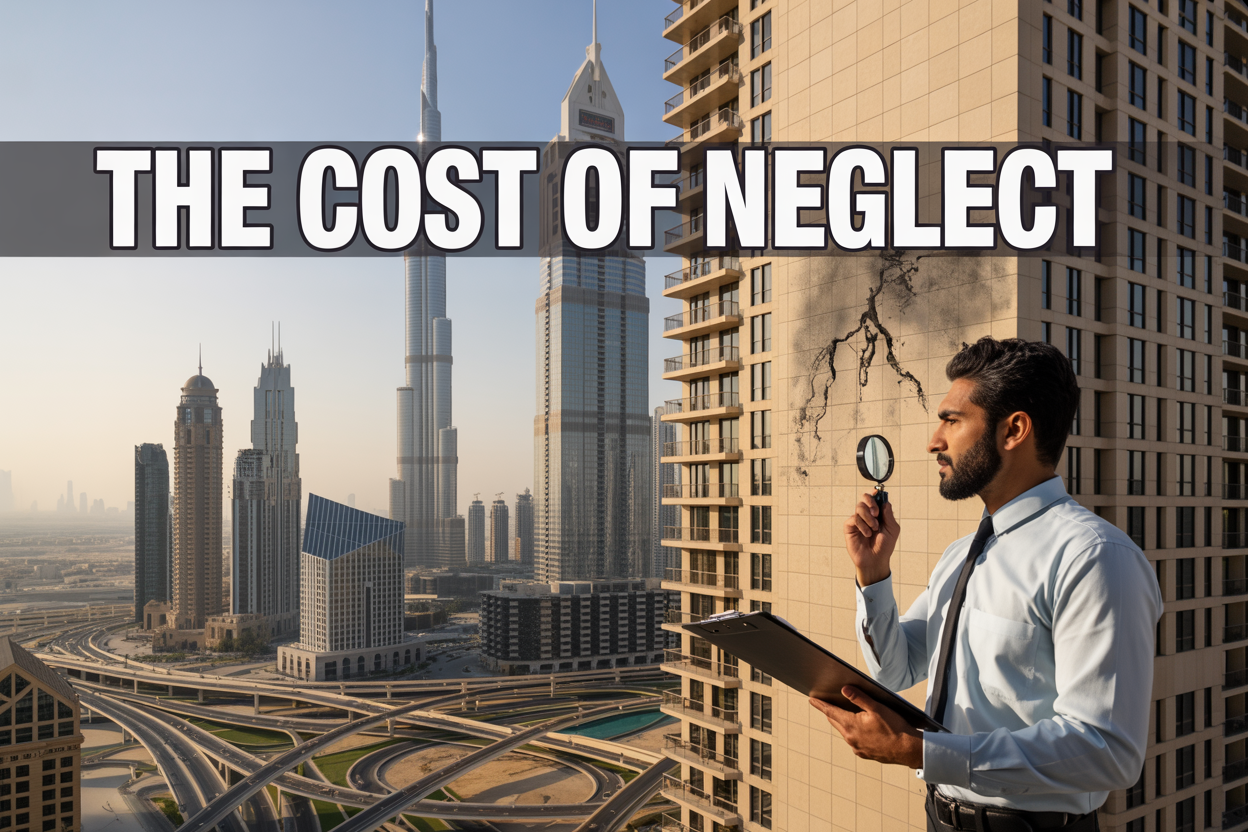
Property buyers in Dubai face hidden costs that can reach tens of thousands of dirhams when they skip professional inspections. The cost of neglect becomes painfully clear when structural defects, electrical issues, and incomplete work surface after you’ve already moved in.
This guide is for property buyers, real estate investors, and homeowners in Dubai who want to protect their investment and avoid expensive surprises. Whether you’re purchasing your first home or adding to your portfolio, understanding what a comprehensive property inspection reveals can save you significant money and stress.
We’ll explore the financial consequences of skipping property inspections, showing you real examples of repair costs that could have been the developer’s responsibility. You’ll also discover the most common property defects found in Dubai developments, from plumbing failures to finishing issues that affect your property’s value. Finally, we’ll walk through the comprehensive property inspection process and help you choose the right inspection company to safeguard your investment.
Don’t let neglect turn your dream property into a financial nightmare – discover what professional inspectors look for and why this step is non-negotiable in Dubai’s fast-paced construction market.
Understanding Property Snagging and Its Critical Role in Dubai
Definition and Purpose of Property Snagging
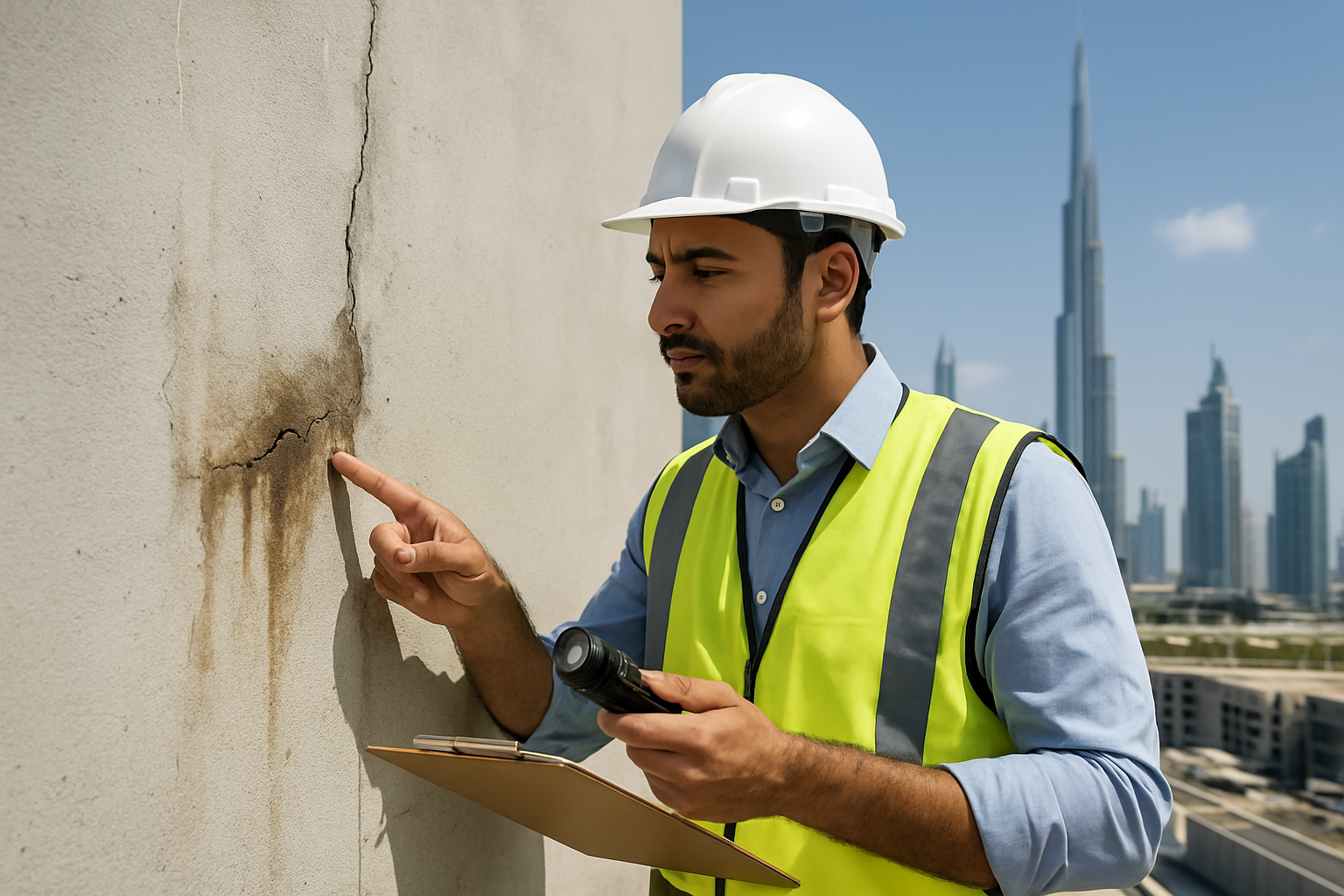
Property snagging represents a comprehensive inspection process that examines newly constructed or renovated properties for defects, flaws, or other issues that might diminish quality, safety, and overall value. This critical evaluation typically occurs before the final handover to the buyer or tenant, serving as a quality assurance measure that protects property investments.
The fundamental purpose of property snagging extends far beyond simple fault-finding. It functions as a systematic examination that scrutinizes both the interior and exterior of a property, utilizing experts with backgrounds in construction or architecture to identify unfinished work, poor craftsmanship, or structural defects. This process ensures that properties meet the exact standards and conditions promised by developers or builders.
Professional property snagging services involve detailed inspections that can uncover a wide range of issues commonly overlooked during standard property viewings. These problems frequently include uneven paint finishes, faulty plumbing systems, broken fixtures, misaligned doors and windows, electrical system irregularities, and structural weaknesses. The comprehensive nature of this inspection process means that even the smallest defects that an untrained eye might miss are identified and documented.
The timing of property snagging proves crucial for maximum effectiveness. Conducting this inspection before taking possession allows buyers to address identified issues while the property remains under the developer’s responsibility. This strategic timing enables property owners to negotiate repairs or price reductions before finalizing their purchase, potentially resulting in significant cost savings and preventing future complications.
Beyond mere defect identification, property snagging serves as a safeguard mechanism for buyers and investors alike. It verifies that the property is delivered in the exact condition promised by the developer or builder. Many developers, in their pursuit of meeting tight timelines and project completion schedules, may overlook certain quality aspects that could detract from the final property standard. Snagging identifies such problems early, ensuring buyers don’t inherit issues requiring significant repairs later.
The documentation aspect of professional snagging services proves invaluable for property owners. A comprehensive snagging report provides detailed documentation of all issues discovered during the inspection, which can be submitted to builders or developers for corrective action. This documentation becomes particularly valuable in case of future disputes, serving as concrete evidence of property conditions at the time of inspection.
Professional snagging services demonstrate their value through their expertise and specialized tools that enable identification of defects that might escape notice during casual inspections. These experts possess intimate knowledge of building regulations and industry standards, ensuring properties meet all legal and safety requirements. Their trained eyes can spot subtle signs of potential problems that could develop into major issues if left unaddressed.
Why Dubai’s Rapid Construction Makes Snagging Essential
Dubai’s unprecedented construction boom and rapid development pace create unique challenges that make property snagging absolutely essential for protecting investments. The emirate’s ambitious architectural projects and accelerated construction timelines, while impressive in scope and scale, can sometimes result in quality control issues that only thorough snagging inspections can identify and address.
The pressure to complete projects within aggressive timelines often leads to situations where certain quality aspects may be compromised or overlooked. Developers working under tight schedules may inadvertently allow minor defects to slip through quality control processes, making post-construction snagging inspections crucial for identifying these issues before they become major problems.
Dubai’s construction industry encompasses a diverse range of architectural styles, from ultra-modern skyscrapers to luxury residential developments, each presenting unique challenges in terms of quality control and defect identification. The complexity of these projects, combined with the involvement of multiple contractors and subcontractors, increases the likelihood of coordination issues that can manifest as property defects.
The cost of neglect in Dubai’s property market can be particularly severe given the high property values and investment levels involved. When defects go unidentified during the initial inspection phase, property owners may find themselves facing substantial repair costs that could have been avoided through proper snagging procedures. These costs can significantly impact the overall return on investment and affect long-term property values.
Climate considerations in Dubai also make snagging particularly important. The harsh desert climate, with its extreme temperatures and occasional sandstorms, places additional stress on building materials and construction systems. Snagging inspections can identify potential vulnerabilities that might become problematic under these challenging environmental conditions.
The diverse workforce involved in Dubai’s construction projects, while bringing valuable expertise from around the world, can sometimes result in varying quality standards and construction practices. Professional snagging services help ensure consistency in quality regardless of which teams were involved in different aspects of construction.
Dubai’s regulatory environment and building standards require strict compliance, making professional snagging services essential for verifying that properties meet all local requirements. This compliance aspect protects property owners from potential legal issues and ensures their investments align with emirate-specific building codes and safety standards.
Timing Your Property Inspection for Maximum Protection
Strategic timing of property inspections plays a pivotal role in maximizing protection for property investments and ensuring optimal outcomes from the snagging process. The most effective approach involves conducting comprehensive inspections before taking final possession of the property, while it remains under the developer’s direct responsibility and warranty coverage.
The pre-handover inspection window represents the most advantageous timing for property snagging activities. During this period, developers typically remain obligated to address identified defects at no cost to the buyer, making it the most cost-effective time to identify and resolve issues. This timing ensures that buyers don’t inherit problems that could become expensive to fix once ownership transfers.
Planning inspections well in advance of the scheduled handover date provides adequate time for thorough examination and subsequent remedial work if needed. Rushing through inspections close to handover deadlines can compromise the thoroughness of the process and may not allow sufficient time for developers to address identified issues properly.
The inspection timing should also consider the property’s occupancy status and accessibility. Vacant properties allow for more comprehensive inspections, enabling thorough examination of all areas without disrupting occupants or dealing with furnished spaces that might obscure potential defects.
Seasonal timing considerations prove important in Dubai’s climate context. Conducting inspections during different weather conditions can reveal various types of issues, such as water ingress during rare rainfall or air conditioning efficiency during peak summer temperatures. This comprehensive approach ensures that property systems perform adequately under various environmental conditions.
Post-completion but pre-occupancy timing allows for testing of all building systems under normal operating conditions. This includes examining HVAC systems, plumbing functionality, electrical systems, and other mechanical components that may not reveal defects until they’ve been operational for a period.
The timing of follow-up inspections should be strategically planned to monitor how identified issues have been addressed and to catch any new problems that might emerge after initial occupancy. This ongoing monitoring approach ensures sustained property quality and helps maintain long-term investment value.
Documentation timing proves crucial for maintaining comprehensive records throughout the inspection process. Immediate documentation of identified issues, along with photographic evidence and detailed descriptions, creates a valuable reference that can be used for tracking remedial work progress and ensuring complete resolution of identified problems.
Professional snagging services typically recommend allowing sufficient time between inspection and planned occupancy to accommodate any necessary remedial work. This buffer period prevents delays in occupancy schedules while ensuring that all identified issues receive proper attention and resolution before residents move in.
The timing strategy should also account for warranty periods and developer responsibilities, ensuring that inspections occur while maximum protection and recourse options remain available to property owners. This proactive approach maximizes the value derived from developer warranties and minimizes out-of-pocket expenses for addressing property defects.
Financial Consequences of Skipping Property Inspections

Hidden Repair Costs After Moving In
Moving into a new property without conducting a comprehensive inspection can lead to substantial financial surprises that far exceed the initial cost savings of skipping professional snagging services. The reference data reveals that in Dubai, repairing hidden property defects can cost homeowners an average of AED 5,000, with major issues frequently exceeding AED 52,000. This stark reality underscores why professional property inspection companies consistently emphasize the importance of thorough pre-handover assessments.
When property owners bypass professional inspections, they unknowingly accept properties with concealed defects that manifest after occupancy. These hidden issues often include faulty electrical systems, plumbing irregularities, HVAC malfunctions, and structural imperfections that weren’t immediately visible during initial walkthroughs. The financial impact becomes particularly severe because post-occupancy repairs require homeowners to bear the full cost burden, unlike the pre-handover period when developers remain liable for defect rectification.
Professional property inspection companies in the UAE have documented extensive evidence of the cost differential between preventive inspections and reactive repairs. The data shows that clients have saved an average of AED 28,600+ in major repair costs through detailed professional inspections. This savings figure represents the difference between identifying and addressing issues during the defect-free period versus handling them independently after handover completion.
The hidden repair cost category encompasses various property systems and components. HVAC-related repairs often constitute the largest expense segment, particularly in Dubai’s climate where air conditioning systems work continuously. When these systems fail due to improper installation, inadequate ventilation duct connections, or electrical component defects, replacement and repair costs can range from AED 8,000 to AED 25,000 depending on the property size and system complexity.
Plumbing system failures represent another significant cost category. Hidden leaks within walls, faulty pipe connections, inadequate drainage systems, and water heater malfunctions can result in extensive water damage requiring comprehensive remediation. These repairs often involve accessing concealed piping systems, replacing damaged flooring and wall materials, and addressing secondary issues like mold growth or structural water damage. Professional moisture detection tools used during comprehensive inspections can identify these problems before they escalate into major financial burdens.
Electrical system defects discovered after moving in frequently require extensive rewiring, panel upgrades, and safety compliance modifications. The cost implications extend beyond immediate repair expenses to include temporary accommodation costs if electrical hazards make the property temporarily uninhabitable. Professional inspections using thermal imaging technology can detect electrical hotspots, overloaded circuits, and potential fire hazards that would otherwise remain hidden until system failure occurs.
Structural and finishing defects contribute significantly to post-occupancy repair costs. Wall cracks, floor unevenness, door and window alignment issues, and poor paint finishes may seem cosmetic initially but often indicate underlying construction problems requiring comprehensive remediation. The cost of addressing these issues after moving in includes not only material and labor expenses but also the inconvenience costs of living in an active construction environment.
Developer Liability During Defect-Free Period
Understanding developer liability during the defect-free period is crucial for property buyers seeking to minimize their financial exposure to construction and finishing defects. In Dubai’s real estate market, developers typically provide warranty periods ranging from one to two years, during which they remain legally obligated to address defects identified in newly handed-over properties. This critical timeframe represents a valuable opportunity for property owners to transfer repair costs back to the responsible parties rather than absorbing these expenses personally.
The defect-free period serves as a contractual protection mechanism where developers must rectify any construction defects, finishing irregularities, or system malfunctions at their own expense. However, this protection only applies when defects are properly identified, documented, and reported within the specified warranty timeframe. Properties that undergo comprehensive professional inspections during this period benefit from detailed documentation that supports warranty claims and ensures developer accountability.
Professional property inspection companies play a vital role in maximizing the value of developer liability periods. Their detailed inspection reports serve as legal evidence in disputes with developers, helping property owners claim compensation for repairs or even terminate contracts in cases of major defects. The comprehensive documentation provided by qualified civil engineers with UAE experience creates an authoritative record that developers cannot easily dispute or dismiss.
The scope of developer liability extends across all major property systems and components. HVAC systems, plumbing installations, electrical networks, structural elements, and finishing work all fall under warranty coverage when properly documented through professional inspections. This comprehensive coverage means that defects in air conditioning systems, water heaters, ventilation ducts, electrical connections, supply lines, drainage systems, and surface finishes can be addressed at developer expense rather than homeowner cost.
Timing becomes critical in leveraging developer liability effectively. Many property owners discover defects months after handover when seasonal changes, increased usage, or system stress reveal previously hidden problems. Without proper initial documentation, proving that these issues existed at handover becomes challenging, potentially voiding warranty claims and transferring repair costs to property owners.
The financial protection offered by developer liability during the defect-free period can be substantial. Major system replacements, structural repairs, and comprehensive remediation work that would cost property owners tens of thousands of dirhams can be addressed through warranty claims when properly documented. This protection represents one of the most significant financial benefits of conducting thorough property inspections immediately upon handover.
Professional inspection services enhance the effectiveness of warranty claim processes by providing standardized documentation that meets industry and regulatory requirements. RERA-certified inspection companies ensure that their reports comply with local regulations and provide the necessary detail level for successful warranty claims. This professional documentation significantly improves the likelihood of successful dispute resolution and cost recovery from developers.
The developer liability period also covers secondary damages resulting from initial defects. For example, if a plumbing defect causes water damage to flooring, walls, or personal property, the developer’s liability may extend to comprehensive remediation including replacement of damaged materials and restoration of affected areas. Professional inspections that identify these interconnected issues ensure comprehensive coverage under warranty provisions.
Impact on Property Investment Value
Property investment value faces significant negative impact when comprehensive inspections are neglected, creating long-term financial consequences that extend far beyond immediate repair costs. The correlation between property condition and market value becomes particularly evident in Dubai’s competitive real estate market, where buyers increasingly expect detailed property disclosures and professional inspection reports as part of standard due diligence processes.
Unaddressed property defects systematically erode investment value through multiple mechanisms. Properties with known but unresolved issues face reduced marketability, extended selling periods, and decreased negotiating power when owners eventually decide to sell. The accumulated effect of deferred maintenance and unidentified defects creates a compounding negative impact on property appreciation potential.
Market data indicates that 44% of UAE homebuyers reported defects in their newly purchased properties according to 2022 studies by leading property websites. This statistic highlights the prevalence of property issues and suggests that buyers are becoming increasingly aware of the importance of thorough property assessments. Properties with documented inspection histories and resolved defect records demonstrate superior market positioning compared to properties with unknown or unaddressed condition issues.
The investment impact extends to rental property performance as well. Properties with unresolved defects typically experience higher tenant turnover, increased vacancy periods, and reduced rental rates due to ongoing maintenance issues and tenant complaints. Professional property inspections that identify and facilitate resolution of these issues help maintain consistent rental income and preserve long-term investment performance.
Professional property inspection reports create valuable documentation that enhances property investment profiles. Comprehensive reports detailing property condition, system functionality, and maintenance requirements provide prospective buyers or tenants with confidence in their investment decisions. This transparency premium often translates to faster transaction completion, reduced price negotiations, and improved market positioning.
The preventive maintenance aspect of comprehensive property inspections contributes significantly to investment value preservation. By identifying potential issues before they escalate into major system failures, property owners can implement cost-effective preventive measures that maintain property condition and system functionality over time. This proactive approach helps properties maintain their market value and competitive position within local real estate markets.
Insurance considerations also impact investment value when property inspections are neglected. Properties with documented inspection histories and resolved defect records often qualify for improved insurance terms and coverage options. Conversely, properties with unknown condition issues may face higher insurance premiums or coverage limitations that reduce overall investment returns.
The resale value impact becomes particularly pronounced in Dubai’s luxury property segments where buyers expect premium finishes and system functionality. Properties that cannot demonstrate proper maintenance histories and condition documentation face significant discounting during sales negotiations. The cost of comprehensive inspections represents a minimal investment compared to the potential value preservation benefits over the property ownership period.
Long-term investment performance depends heavily on maintaining property systems in optimal condition. The reference data showing that professional inspections can identify 150+ snags in apartments and 265+ snags in villas demonstrates the comprehensive nature of potential issues that could impact property value if left unaddressed. Each identified and resolved issue contributes to overall property condition improvement and investment value protection.
The financing implications of property condition also affect investment value. Properties with documented condition issues may face lending restrictions or require additional inspections during refinancing processes. Maintaining comprehensive inspection records and addressing identified defects helps ensure continued financing availability and optimal lending terms throughout the investment period.
Commercial property investments face even more significant value impacts from neglected inspections. Office buildings, retail spaces, and warehouse properties with unaddressed system defects may face tenant retention challenges, increased operating costs, and reduced net operating income that directly impacts property valuations and investment returns.
Common Property Defects Found in Dubai Developments

A. Plumbing System Issues and Water Damage
Water-related problems represent some of the most destructive and costly defects found in Dubai developments. Professional property inspections consistently reveal that plumbing systems are among the most problematic areas in newly constructed properties across the emirate.
Leakages and Seepage
One of the most common issues identified during comprehensive property inspections is water seepage, which occurs due to faulty waterproofing or compromised pipe installations. These problems often manifest in various forms throughout the property. Water seepage can originate from poorly sealed joints, inadequate waterproofing membranes, or substandard construction practices that prioritize speed over quality.
The cost of neglect becomes apparent when these minor leaks develop into major structural issues. Water infiltration can cause significant damage to internal walls, flooring, and even affect neighboring units in multi-story developments. Property inspectors frequently discover hidden moisture damage behind walls and under flooring materials, where water has been slowly accumulating undetected.
Low Water Pressure and Pipe Blockages
Another prevalent concern uncovered during property inspections involves inadequate water pressure and blocked drainage systems. Many Dubai properties suffer from undersized pipes or improper installation techniques that result in insufficient water flow to various fixtures throughout the home. This issue particularly affects higher floors in multi-story developments where water pressure naturally decreases with elevation.
Blocked or partially obstructed pipes create ongoing inconveniences that can escalate into expensive repair situations. Property inspectors thoroughly assess plumbing systems by testing water flow rates at multiple points, checking for proper pipe sizing, and identifying potential bottlenecks in the distribution network.
Water Damage Indicators
Professional inspections reveal various indicators of water damage that untrained eyes might overlook. These include discoloration on walls and ceilings, soft or bubbled drywall surfaces, and musty odors suggesting trapped moisture. Such signs often point to more serious underlying problems with plumbing systems or waterproofing failures.
The long-term implications of undetected water damage extend beyond cosmetic concerns. Persistent moisture creates ideal conditions for mold growth, which poses health risks and requires expensive remediation efforts. Additionally, water damage can compromise structural integrity over time, leading to costly repairs that far exceed the initial investment in professional property inspection services.
B. Electrical Safety and Installation Problems
Electrical system deficiencies represent serious safety hazards and are frequently identified during comprehensive property inspections in Dubai developments. The rapid pace of construction often results in electrical installations that fail to meet proper safety standards.
Faulty Wiring and Circuit Issues
Property inspections consistently uncover outdated wiring systems, exposed cables, and overloaded circuits that pose significant fire hazards. These electrical defects occur when construction teams rush to meet delivery deadlines without ensuring proper installation standards. Faulty wiring can manifest as flickering lights, intermittent power failures, or complete system malfunctions.
Overloaded circuits represent particularly dangerous situations where electrical demand exceeds system capacity. This condition generates excessive heat that can ignite surrounding materials and cause devastating fires. Professional property inspectors use specialized equipment to test electrical loads and identify circuits operating beyond safe parameters.
Malfunctioning Components and Safety Hazards
Detailed inspection reports frequently highlight problems with switches, power outlets, and electrical panels that indicate substandard installation practices. Loose power outlets create arc faults that can spark fires, while flickering lights suggest poor connections or inadequate electrical supply. Non-functional switches often result from improper wiring or defective components installed during construction.
These electrical issues require immediate attention to prevent safety hazards and ensure compliance with local electrical codes. The cost of neglecting electrical problems can be catastrophic, potentially resulting in property damage, personal injury, or loss of life.
Distribution Panel Concerns
Professional inspections often reveal poorly labeled distribution boards and inadequately protected circuits. Proper electrical panel configuration is essential for safe operation and emergency response. When electrical panels lack clear labeling or proper circuit protection, property owners face increased risks during maintenance or emergency situations.
C. Structural Defects in Walls, Floors and Ceilings
Structural integrity issues represent some of the most serious problems identified during property inspections, with implications that extend far beyond cosmetic concerns.
Cracks and Foundation Issues
Property inspectors frequently discover cracks in walls and ceilings that indicate foundation problems or poor construction quality. While minor hairline cracks might seem insignificant, they often signal underlying structural issues that require professional evaluation. Deep structural cracks can affect building stability and compromise the property’s long-term safety.
These defects typically result from inadequate foundation work, settlement issues, or substandard construction materials. The cost of neglecting structural problems can be enormous, potentially requiring extensive remedial work that affects the entire property.
Poor-Quality Finishing and Construction
Many newly built Dubai properties suffer from rushed construction that results in uneven surfaces, misaligned elements, and inferior finishing quality. These issues include uneven paint application, loose tiles, poorly aligned doors and windows, and inconsistent floor levels. While these might appear to be minor cosmetic problems, they often indicate broader quality control issues throughout the construction process.
Flooring Defects and Installation Problems
Professional property inspections regularly identify flooring problems including cracked or chipped tiles, loose installations, and uneven surfaces. These defects create trip hazards and indicate poor installation practices. Hollow-sounding tiles suggest inadequate adhesion that will lead to failure over time, while inconsistent patterns and grout lines reveal rushed workmanship.
The cost of replacing defective flooring after occupancy far exceeds the expense of identifying and correcting these problems during the initial inspection phase.
D. HVAC System Malfunctions
Given Dubai’s extreme climate conditions, properly functioning HVAC systems are essential for comfortable living. Property inspections consistently reveal significant problems with air conditioning and ventilation systems.
Inefficient Cooling Systems
Professional inspections frequently uncover air conditioning systems that fail to cool efficiently due to various factors including clogged filters, refrigerant leaks, and improper installation. These problems result in inadequate temperature control and significantly higher energy consumption, leading to substantial ongoing costs for property owners.
Inefficient HVAC systems often indicate rushed installation practices where proper commissioning and testing were omitted. The cost of neglecting these issues includes both comfort concerns and dramatically increased utility expenses.
Ventilation and Air Quality Issues
Poor ventilation represents a serious problem that creates conditions conducive to mold growth, particularly in bathrooms and kitchens. Inadequate airflow systems fail to remove moisture and contaminants, leading to indoor air quality problems that affect occupant health and comfort.
Comprehensive property inspections help detect ventilation problems before they develop into expensive mold remediation situations. Properly functioning ventilation systems are essential for maintaining healthy indoor environments and preventing moisture-related damage.
Noisy and Vibrating Units
Property inspections often identify HVAC units that generate excessive noise or vibration, indicating mechanical problems or poor installation practices. These issues not only create comfort problems but also suggest impending system failures that will require expensive repairs or replacement.
E. Carpentry and Finishing Quality Issues
Carpentry and finishing defects represent widespread problems in Dubai developments that significantly impact property value and functionality.
Cabinet and Built-in Defects
Professional inspections consistently reveal problems with kitchen cabinets, wardrobes, and other built-in elements. Common issues include uneven doors and drawers, loose hinges, misaligned handles, and rough or splintered edges. These defects compromise both functionality and aesthetics while indicating poor craftsmanship throughout the construction process.
Missing panels, loose screws, and inadequate hardware installation create ongoing maintenance issues that property owners must address at their own expense if not identified during the initial inspection process.
Door and Window Alignment Problems
Misaligned doors and windows represent frequent findings during property inspections. These components should operate smoothly and seal properly, but rushed construction often results in doors that stick, windows that won’t lock correctly, and visible gaps that compromise insulation and security.
Hinges that are poorly fitted or loosely attached create ongoing operational problems while gaps around frames allow dust infiltration and reduce energy efficiency.
Surface Preparation and Paint Quality
Paint defects and surface preparation issues are among the most visible problems identified during property inspections. These include uneven finishes, brush marks, bubbling or peeling paint, and stains from previous water damage that were painted over rather than properly addressed.
Poor paint quality often conceals more serious underlying problems including moisture issues, structural defects, or inadequate surface preparation. Professional inspectors look beyond surface appearances to identify hidden problems that could develop into expensive repair situations.
The cost of neglecting these finishing issues extends beyond aesthetics, as poor-quality work often indicates broader construction problems that affect the property’s long-term value and performance.
Comprehensive Property Inspection Process
Pre-Handover Inspection Benefits
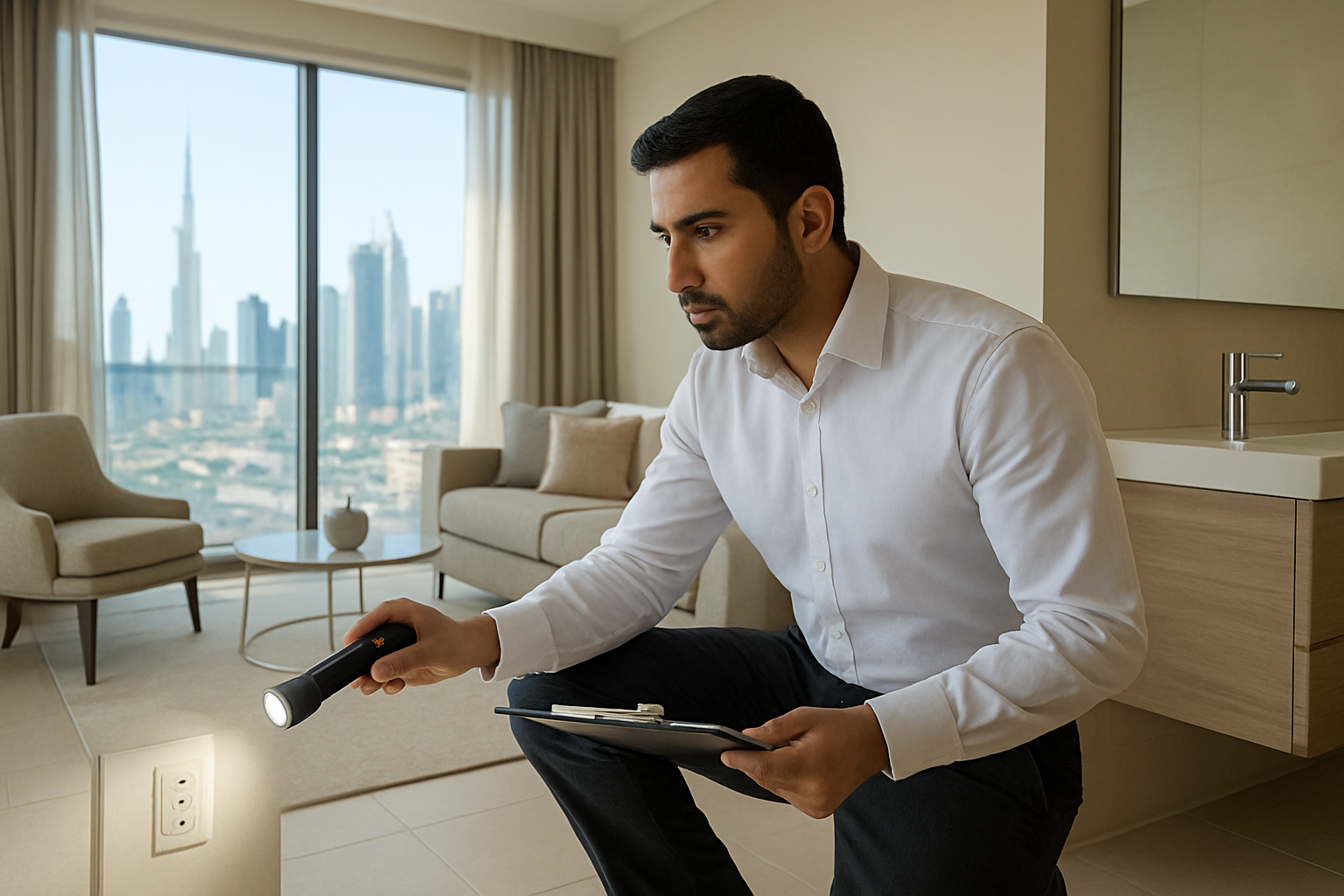
Pre-handover inspections represent a critical phase in Dubai’s property acquisition process, particularly for new developments and off-plan properties. This specialized form of property inspection occurs just before the buyer takes possession of their new property, serving as the final quality assurance checkpoint between the developer and the buyer.
The strategic timing of pre-handover inspections cannot be overstated. These inspections take place when the property is officially complete according to the developer but before the keys are handed over to the buyer. This timing provides buyers with the optimal opportunity to identify any defects, incomplete work, or deviations from the agreed-upon specifications while the developer is still contractually obligated to address these issues at no additional cost to the buyer.
One of the most significant advantages of pre-handover inspections is their role in preventing costly surprises after taking possession. Hidden defects that might not be immediately apparent to the untrained eye can be identified and documented by professional property inspectors. These could range from minor cosmetic issues like paint defects or tile misalignment to more serious structural concerns or mechanical system malfunctions. By conducting this inspection before handover, buyers can ensure that all identified issues are rectified by the developer, avoiding the expense and inconvenience of addressing these problems independently after moving in.
Pre-handover inspections also serve as powerful negotiation tools in the final stages of property acquisition. The comprehensive inspection report provides documented evidence of any deficiencies, creating a clear framework for discussions with the developer. This documentation strengthens the buyer’s position when requesting repairs, replacements, or even price adjustments based on the condition of the property. The detailed nature of professional inspection reports ensures that all parties have a clear understanding of the property’s current state and what needs to be addressed.
For luxury properties in Dubai, pre-handover inspections are particularly valuable given the high standards expected in the emirate’s premium real estate market. These inspections ensure that every finish, fixture, and system meets the quality standards promised in the sales agreement. This is especially important in Dubai’s competitive real estate landscape, where buyers invest significant amounts in properties and expect perfection in return.
The legal protection aspect of pre-handover inspections cannot be overlooked. These inspections create a documented record of the property’s condition at the time of handover, which can be crucial if disputes arise later. This documentation serves as evidence of the property’s state when it was officially transferred to the buyer, protecting both parties in potential legal proceedings.
Advanced Technology Used in Modern Inspections
Modern property inspections in Dubai have evolved significantly with the integration of advanced technological tools and methodologies. Professional property inspectors now utilize sophisticated equipment that provides far more detailed and accurate assessments than traditional visual inspections alone.
Thermal imaging technology represents one of the most significant advances in property inspection capabilities. This technology allows inspectors to detect temperature variations within walls, ceilings, and floors that may indicate hidden problems such as water leaks, electrical issues, or insulation deficiencies. Thermal cameras can identify moisture intrusion behind walls or under flooring that would otherwise remain undetected until significant damage has occurred. In Dubai’s climate, where cooling systems work extensively, thermal imaging can also identify air conditioning inefficiencies and ductwork problems that could lead to higher energy costs.
Digital photography and video documentation have become standard components of modern property inspections. High-resolution cameras capture detailed images of every identified defect, providing visual evidence that supports the written inspection report. This photographic documentation is invaluable for both immediate reference and future comparison, particularly when tracking the resolution of identified issues. Video documentation can capture the operation of mechanical systems, demonstrating functionality or highlighting operational concerns that static photographs cannot adequately convey.
Moisture detection equipment has become increasingly sophisticated, utilizing both pin-type and pinless moisture meters to identify water intrusion issues. These tools can detect moisture levels in various materials without causing damage to surfaces, allowing inspectors to identify potential problems early before they develop into more serious issues like mold growth or structural damage. In Dubai’s environment, where humidity can be a concern, accurate moisture detection is crucial for maintaining property integrity.
Electronic testing equipment for electrical systems has advanced considerably, enabling inspectors to perform comprehensive assessments of wiring, outlets, and electrical panels. Digital multimeters, circuit analyzers, and thermal imaging specifically designed for electrical applications can identify potential fire hazards, code violations, and system inefficiencies. This is particularly important in Dubai’s modern developments, where complex electrical systems are standard but require proper installation and maintenance.
Structural assessment tools, including laser levels and digital measuring devices, ensure that construction meets specified tolerances and building standards. These tools can detect structural irregularities, settlement issues, or construction defects that might not be visible to the naked eye. In Dubai’s rapidly developing construction environment, these technological tools help ensure that buildings meet the high standards expected in the emirate.
Drone technology is increasingly being utilized for exterior inspections of high-rise buildings and large properties. Drones equipped with high-resolution cameras can safely access areas that would be difficult or dangerous for human inspectors to reach, such as rooftops, upper-floor exteriors, and architectural features of tall buildings. This technology is particularly relevant in Dubai, where many properties are high-rise developments that require comprehensive exterior assessments.
Detailed Reporting and Documentation Methods
The documentation phase of property inspections represents the culmination of the assessment process, where all findings are compiled into comprehensive reports that serve multiple critical functions throughout the property transaction process.
Professional inspection reports in Dubai follow standardized formats that ensure consistency and completeness across all assessments. These reports typically begin with property identification information, including location, type of property, age, and basic specifications. This foundational information establishes the context for all subsequent findings and recommendations.
The systematic organization of inspection reports follows a logical progression through different areas and systems of the property. Reports typically address structural elements first, followed by mechanical systems, electrical systems, plumbing, HVAC systems, and finally cosmetic and finishing elements. This methodical approach ensures that no area of the property is overlooked and that readers can easily locate information about specific aspects of the property.
Photographic documentation forms an integral component of modern inspection reports. Each identified defect or concern is accompanied by high-quality photographs that clearly illustrate the issue. These images are often annotated with arrows, circles, or text to highlight specific problems and ensure that readers can easily identify the concerns being described. The photographs serve as irrefutable evidence of the property’s condition at the time of inspection and provide valuable reference material for contractors who may be addressing the identified issues.
Detailed descriptions accompany each photograph, providing context and explaining the significance of identified problems. These descriptions are written in clear, accessible language that can be understood by property buyers who may not have technical construction knowledge. The descriptions typically include information about the potential consequences of ignoring the identified issue and recommendations for appropriate remediation measures.
Priority classification systems are commonly employed in professional inspection reports to help readers understand the relative importance of different identified issues. Problems are typically categorized as immediate safety concerns, major defects requiring prompt attention, minor issues that should be addressed during routine maintenance, and cosmetic concerns that may affect property value but do not pose functional problems. This classification system helps buyers prioritize their responses to inspection findings and budget appropriately for necessary repairs.
Recommendations sections provide specific guidance on addressing identified issues. These recommendations may include suggested repair methods, estimated timeframes for completion, and advice on whether professional contractors are required or if issues can be addressed through routine maintenance. For complex problems, recommendations may suggest additional specialized inspections or consultations with specific types of contractors or engineers.
Cost estimation guidance, while not always including specific dollar amounts, often provides general information about the relative expense of addressing different types of problems. This information helps buyers understand the financial implications of identified issues and make informed decisions about how to proceed with their property purchase.
Summary sections distill the key findings of the inspection into easily digestible formats. These summaries highlight the most significant issues identified during the inspection and provide overall assessments of the property’s condition. Summary sections are particularly valuable for busy buyers who need to quickly understand the main points of lengthy detailed reports.
Documentation methods also include the creation of digital archives that preserve inspection records for future reference. These digital files can be easily shared with contractors, real estate professionals, and legal representatives as needed throughout the property transaction process. The accessibility and permanence of digital documentation ensure that inspection findings remain available for reference long after the initial assessment is complete.
Quality assurance measures are built into professional reporting processes to ensure accuracy and completeness. Many professional inspection companies employ review procedures where senior inspectors verify the findings and recommendations of field inspectors before final reports are delivered to clients. This multi-level review process helps maintain the high standards expected in Dubai’s professional property inspection industry.
Top Property Snagging Companies in Dubai

MMP – Commercial and Residential Expertise
MMP stands out as a comprehensive property snagging service provider that specializes in both commercial and residential inspections across Dubai. Their dual expertise makes them particularly valuable for property investors who maintain diverse portfolios spanning different property types. The company’s approach integrates commercial-grade inspection standards with residential property requirements, ensuring consistent quality across all property categories.
For residential properties, MMP conducts thorough inspections of apartments, villas, and townhouses, focusing on the critical systems that impact daily living. Their residential inspection process covers essential components including HVAC systems, plumbing infrastructure, electrical installations, and structural elements. The team pays particular attention to finishing quality, door and window alignments, and the functionality of kitchen and bathroom fixtures.
In the commercial sector, MMP extends their services to offices, retail spaces, and warehouses. Their commercial inspections focus on compliance with business-specific requirements, including accessibility standards, fire safety systems, and specialized infrastructure needs. This comprehensive approach ensures that commercial properties meet operational requirements while identifying potential issues that could impact business continuity.
Property Snagging UAE – Emirate-Wide Experience
Property Snagging UAE has established itself as a leading inspection service with extensive experience across all seven emirates of the UAE. Their nationwide coverage represents a significant advantage for property owners with investments spread across different emirates, ensuring consistent inspection standards regardless of location.
The company’s emirate-wide experience provides them with deep knowledge of regional construction standards, developer practices, and common defect patterns specific to different areas. This geographical expertise proves invaluable when conducting inspections in areas like Abu Dhabi, Sharjah, and Ras Al Khaimah, where local building practices and environmental factors may influence property conditions.
Their extensive experience across the UAE market enables them to provide comparative insights, helping clients understand how their property’s condition relates to regional standards. This emirate-wide perspective also ensures that their inspection reports account for location-specific factors that might affect property maintenance and long-term value.
RAMI Property Inspections – Licensed Engineering Approach
RAMI Property Inspections differentiates itself through its licensed engineering approach to property snagging. The company employs qualified civil engineers who bring technical expertise and professional engineering standards to every inspection. This engineering-focused methodology ensures that inspections go beyond surface-level observations to identify structural and systemic issues that require professional engineering assessment.
Their licensed engineering approach means that inspections are conducted using established engineering principles and industry standards. The engineers assess load-bearing elements, structural integrity, and compliance with engineering specifications. This technical depth proves particularly valuable for complex properties or when identifying issues that require engineering solutions.
The engineering credentials of RAMI’s inspection team also provide additional credibility to their reports, making them valuable for legal proceedings, insurance claims, or negotiations with developers. Their professional engineering perspective ensures that all identified defects are properly categorized and prioritized based on their potential impact on structural integrity and safety.
The Snag Master – Affordable Quality Inspections
The Snag Master has positioned itself as the UAE’s premier RERA-certified property inspection company, offering professional snagging services that balance affordability with comprehensive quality. As a RERA-certified provider, The Snag Master ensures that all inspections meet regulatory standards while maintaining competitive pricing structures that make professional inspections accessible to a broader range of property owners.
The company’s inspection process is conducted exclusively by civil engineers with over five years of UAE experience, ensuring that no technicians are involved in the core inspection activities. This engineer-only approach guarantees that all defect identification and assessment is performed by qualified professionals who understand UAE construction standards and practices.
The Snag Master’s inspection methodology is notably comprehensive, with their standard practice involving the identification of minimum 150+ snags in apartments and 265+ snags in villas or townhouses. This thorough approach has demonstrated significant value for clients, with the company reporting that they have helped clients save an average of AED 28,600+ in major repair costs through their detailed inspections.
Their nationwide coverage extends across all seven emirates, including specialized services in Dubai, Abu Dhabi, Sharjah, and Ras Al Khaimah. The company’s scope of inspection encompasses all critical property systems, including heating, ventilation, and air conditioning (HVAC) systems, where they inspect air conditioning units, water heaters, ventilation ducts, and electrical connections to identify issues affecting cooling, heating, airflow, or water flow.
For plumbing systems, The Snag Master conducts detailed inspections of supply lines, traps, waste pipes, faucets, and other plumbing components to identify potential leaks, clogs, and corrosion. Their electrical component inspections cover the main electrical panel, circuit loads, sockets, wiring, switches, and light fixtures to ensure compliance with UAE electrical standards and reduce the risk of short circuits.
The company also employs advanced technology in their inspection process, utilizing thermal imaging and moisture detection tools to spot hidden leaks, mold, and other issues that might not be visible during standard visual inspections. This technological approach helps maintain properties in safe, healthy, and problem-free condition.
External property elements receive equal attention, with inspections covering drainage systems, water run-off, manhole locations, driveways, pathways, and patio surfaces. Interior finishing is thoroughly examined, including walls, floors, and ceilings to identify structural or non-structural cracks, poor paint finishes, and hidden stains.
The Snag Master’s commitment to quick turnaround times is evident in their ability to deliver detailed inspection reports within 24 hours of completion. Their reports are tailored for each inspection, providing clear and detailed documentation that is trusted by homeowners and valued by developers.
Land Sterling – RICS Standard Compliance
Land Sterling operates under RICS (Royal Institution of Chartered Surveyors) standard compliance, bringing internationally recognized professional standards to property inspections in Dubai. RICS compliance ensures that all inspections are conducted according to globally accepted surveying and property assessment standards, providing clients with reports that meet international professional requirements.
The RICS standard compliance means that Land Sterling’s inspection processes, methodologies, and reporting formats align with international best practices in property surveying and inspection. This standardization proves particularly valuable for international investors or properties that may be subject to international financing or insurance requirements.
Their RICS compliance also ensures continuous professional development and adherence to ethical standards, providing clients with confidence in the integrity and professionalism of their inspection services. The international recognition of RICS standards adds credibility to inspection reports, making them valuable for various stakeholder communications.
Star Property Inspection – RERA Authorized Services
Star Property Inspection operates as a RERA authorized service provider, ensuring full compliance with Dubai’s Real Estate Regulatory Authority requirements. RERA authorization demonstrates that the company meets the regulatory standards established by Dubai’s real estate authority, providing clients with assurance that their inspection services comply with local regulatory requirements.
The RERA authorization ensures that Star Property Inspection’s services align with Dubai’s real estate regulatory framework, making their reports valuable for regulatory compliance purposes. This authorization also indicates that the company maintains the professional standards and qualifications required by Dubai’s real estate regulatory environment.
Their RERA authorized status provides additional credibility when dealing with developers, real estate agents, and other stakeholders in Dubai’s property market. The regulatory compliance ensures that inspection reports meet the standards expected by various parties involved in property transactions and management.
Now that we have examined the leading property snagging companies in Dubai, it becomes clear that each offers distinct advantages based on their specializations, certifications, and service approaches. The selection of the right company depends on specific property requirements, budget considerations, and the level of technical expertise required for the inspection.
The diversity among these top companies reflects the maturity of Dubai’s property inspection market, where specialized services have evolved to meet different client needs. Whether requiring emirate-wide coverage, engineering expertise, RICS compliance, or RERA authorization, property owners can select companies that align with their specific requirements and quality expectations.
Selecting the Right Property Inspection Company

Evaluating Market Reputation and Expertise
When examining potential property inspection companies, market reputation serves as the foundation for making an informed decision. A company’s standing in Dubai’s competitive real estate market reflects years of consistent service delivery and client satisfaction. The most reliable inspection firms have built their reputation through technical competence, transparency, and proven results across various property types in the UAE.
Professional certifications and technical qualifications form the backbone of a credible property inspection company. The best firms employ inspectors who are certified engineers with specialized knowledge in MEP (Mechanical, Electrical, and Plumbing), HVAC systems, and building infrastructure. These technical credentials ensure that inspections go beyond surface-level observations to provide engineering-grade assessments.
In Dubai’s unique construction environment, inspectors must demonstrate familiarity with local and international standards. Companies that work with ASHRAE, NFPA, ASTM, and UAE authority standards including Dubai Municipality (DM), Dubai Civil Defence (DCD), Dubai Electricity and Water Authority (DEWA), Trakhees, Estidama, and LEED certifications bring invaluable expertise to the inspection process. This comprehensive understanding of regulatory frameworks ensures that inspections meet both compliance requirements and quality expectations.
The UAE’s property landscape presents distinctive challenges that require specialized local experience. Sand infiltration, humidity levels, and extreme temperature variations can significantly impact building performance and longevity. Companies with extensive experience in Dubai’s market understand how these environmental factors affect different building systems and materials. This local knowledge enables inspectors to identify region-specific issues that might be overlooked by firms without adequate UAE experience.
Client testimonials and case studies provide valuable insights into a company’s track record. Established inspection firms should be able to demonstrate their expertise through documented success stories, showing how their inspections have protected buyers from costly defects or helped sellers identify issues before listing. The ability to provide references from recent clients, particularly those involving similar property types or developments, indicates a company’s reliability and consistency.
Industry recognition and partnerships with reputable organizations further validate a company’s market position. Firms that collaborate with leading property developers, real estate agencies, or property management companies have typically earned their trust through consistent performance. These professional relationships often indicate that the inspection company meets high industry standards and can handle complex property assessments.
Importance of Comprehensive Reporting
The quality and comprehensiveness of inspection reporting distinguish professional firms from basic service providers. A credible inspection company should readily provide sample reports that demonstrate their approach to documentation and analysis. These reports serve as the primary deliverable that clients use to make informed decisions about property transactions or maintenance priorities.
Effective inspection reports must include clear, high-resolution photographs of each identified defect. Visual documentation allows property owners, buyers, and sellers to understand the scope and severity of issues without being present during the inspection. Each photograph should be properly labeled and referenced within the report, creating a comprehensive visual record of the property’s condition.
Professional reports extend beyond simple defect identification to include detailed severity assessments and rectification guidance. Each identified issue should be categorized according to its urgency and potential impact on the property’s safety, functionality, and value. This classification system helps clients prioritize repairs and understand which issues require immediate attention versus those that can be addressed over time.
The most valuable reports provide specific recommendations for addressing identified problems. Rather than simply noting that an issue exists, comprehensive reports should include guidance on appropriate repair methods, suggested timeframes for completion, and estimated costs where applicable. This level of detail enables property owners to plan effectively and obtain accurate quotes from contractors.
Modern inspection reports increasingly incorporate sustainability insights that add long-term value beyond defect detection. Companies that include recommendations for improving energy efficiency, water conservation, and indoor air quality help clients reduce utility costs and align with Dubai’s Green Building Regulations. These additional insights transform the inspection from a problem-identification exercise into a strategic planning tool for property optimization.
Technical accuracy in reporting requires that all findings be supported by engineering principles and industry standards. Reports should reference relevant codes, specifications, and best practices to substantiate observations and recommendations. This technical foundation ensures that the report can withstand scrutiny from other professionals and provides a solid basis for negotiations or legal proceedings if necessary.
The format and presentation of reports significantly impact their usefulness. Well-organized reports use clear headings, logical sequences, and executive summaries that allow busy clients to quickly understand key findings. Digital reports with searchable text and hyperlinked contents provide additional convenience for clients who need to reference specific sections or share information with contractors and other professionals.
Technology Integration and Modern Equipment
The integration of advanced technology distinguishes leading property inspection companies from those relying on outdated methods. Modern inspection equipment enables the detection of hidden defects and performance issues that would otherwise remain unidentified until they become costly problems. Companies that invest in state-of-the-art tools demonstrate their commitment to providing comprehensive and accurate assessments.
Thermal imaging cameras represent one of the most valuable technological advances in property inspection. These devices detect temperature variations that indicate air leaks, insulation defects, moisture infiltration, and electrical problems. In Dubai’s climate, where cooling systems work intensively, thermal imaging can identify energy efficiency issues that significantly impact utility costs. The ability to visualize heat patterns provides concrete evidence of problems that might not be apparent through visual inspection alone.
Moisture detection technology plays a crucial role in identifying water damage and potential mold growth areas. Advanced moisture meters can detect elevated humidity levels within walls, floors, and ceilings without requiring destructive testing. Given Dubai’s occasional heavy rainfall and the potential for condensation issues in air-conditioned environments, moisture detection capabilities are essential for comprehensive property assessment.
Laser leveling tools ensure accurate measurement of surface alignments, floor slopes, and structural elements. These precision instruments can detect deviations that might affect drainage, door operation, or aesthetic appeal. In luxury properties where finish quality is paramount, laser measurement technology provides the accuracy needed to identify and document minor but important defects.
Endoscopic cameras enable inspectors to examine concealed installations and hard-to-access areas without causing damage to finished surfaces. These flexible cameras can navigate through pipes, ducts, and wall cavities to identify problems that would otherwise require destructive investigation. This non-invasive approach allows for thorough inspection while preserving property finishes and minimizing disruption.
Digital documentation systems streamline the inspection process and improve report accuracy. Modern inspection companies use tablets, smartphones, and specialized software to record findings in real-time, automatically linking photographs to specific locations and defect categories. This digital workflow reduces transcription errors and enables faster report generation without compromising quality.
Environmental monitoring equipment measures indoor air quality, noise levels, and other factors that affect occupant comfort and health. Companies that include these assessments provide added value by identifying issues that might not be immediately apparent but could affect long-term property enjoyment and resale value.
The proper calibration and maintenance of inspection equipment is equally important as having advanced tools. Professional companies maintain regular calibration schedules and equipment certification records to ensure measurement accuracy. They should be able to provide documentation of their equipment’s calibration status and maintenance history as evidence of their commitment to precision.
Post-Inspection Support and Follow-Up Services
Professional property inspection companies recognize that their responsibility extends beyond report delivery to include ongoing support throughout the remediation process. This post-inspection support distinguishes comprehensive service providers from those that simply complete inspections and move on to the next project. The quality and extent of follow-up services often determine client satisfaction and the ultimate effectiveness of the inspection process.
Effective follow-up begins with detailed explanation of inspection findings and recommendations. Professional companies schedule consultation sessions to review reports with clients, answering questions and clarifying technical terminology. These sessions ensure that clients fully understand identified issues and can make informed decisions about repairs and negotiations. The ability to discuss findings with qualified engineers provides valuable context that might not be apparent from written reports alone.
Ongoing support during the remediation phase adds significant value to the inspection service. Professional companies remain available to consult with contractors, verify repair methods, and assess completed work. This continued involvement ensures that remediation efforts address the root causes of problems rather than just visible symptoms. Companies that provide this level of support help clients avoid incomplete repairs that might lead to recurring issues.
Re-inspection services form a critical component of comprehensive follow-up support. After repairs are completed, professional inspection companies should offer to verify that work has been performed correctly and that identified defects have been properly resolved. These follow-up inspections provide peace of mind and documentation that can be valuable for warranty claims or future property transactions.
Clear communication protocols ensure that clients can easily access support when needed. Professional companies establish dedicated contact methods for post-inspection questions and provide reasonable response timeframes for different types of inquiries. This accessibility demonstrates the company’s commitment to client satisfaction and builds confidence in their service quality.
Documentation of follow-up activities creates valuable records for property owners. Companies should maintain files of all post-inspection communications, additional assessments, and verification inspections. This documentation can prove valuable for insurance claims, warranty issues, or legal proceedings that might arise later.
Training and guidance services help property owners understand maintenance requirements and preventive measures. Professional companies often provide advice on proper system operation, maintenance schedules, and early warning signs that might indicate developing problems. This educational component helps clients protect their investment over the long term and can prevent minor issues from becoming major repairs.
Warranty support services assist clients in pursuing remedy from developers, contractors, or system manufacturers when defects are covered under existing warranties. Experienced inspection companies understand warranty requirements and can provide the documentation and technical support needed to successfully pursue warranty claims. This advocacy can save clients significant time and money while ensuring that warranted defects are properly addressed.
Long-term relationship building through periodic check-ins and maintenance reminders demonstrates a company’s commitment to client success. Professional firms often maintain contact with past clients to provide seasonal maintenance reminders, regulatory updates, or notifications about new services that might benefit their properties. This ongoing relationship approach transforms a one-time transaction into a lasting professional partnership that adds continuous value to the client relationship.
Legal Protection and Compliance Benefits

Dubai Building Standards and Regulations
Dubai’s real estate market operates under a comprehensive framework of building standards and regulations that are designed to ensure property quality, safety, and compliance. The Dubai Land Department (DLD) serves as the primary governing body responsible for overseeing real estate transactions and establishing the regulatory framework that governs property development and ownership in the emirate.
The significance of understanding these building standards cannot be overstated, as they form the foundation of legal protection for property buyers and investors. When comprehensive property inspections are conducted in accordance with these regulations, they serve as a critical tool for verifying compliance and identifying potential violations that could result in costly legal complications.
Dubai’s building codes encompass various aspects of construction, including structural integrity, electrical systems, plumbing infrastructure, fire safety measures, and accessibility requirements. These regulations are continuously updated to reflect international best practices and ensure that properties meet the highest standards of quality and safety. Property inspections conducted by qualified professionals help verify that developments adhere to these stringent requirements.
The regulatory framework also includes specific provisions for different types of properties, including residential apartments, commercial buildings, and mixed-use developments. For apartments in Dubai, the Strata Law plays a particularly important role in regulating common areas and shared facilities, making it essential for property inspectors to understand and evaluate compliance with these specific regulations.
Professional property inspections provide documented evidence of a property’s compliance with local building codes and regulations. This documentation serves as crucial legal protection for property owners, as it demonstrates due diligence in ensuring that their investment meets all applicable standards. The inspection process involves a meticulous assessment of the property against established benchmarks, providing buyers with confidence that their investment is legally sound and compliant.
Developer Accountability During Liability Period
Previously, we’ve established the importance of building standards and regulations in Dubai’s real estate market. With this foundation in mind, it becomes crucial to understand how developer accountability functions during the liability period and how comprehensive property inspections serve as a mechanism for ensuring developer compliance.
The liability period represents a critical window during which developers remain accountable for addressing defects and issues identified in newly delivered properties. During this period, developers are legally obligated to rectify any construction defects, design flaws, or non-compliance issues that may emerge. This accountability framework provides significant legal protection for property buyers, ensuring that they are not left to bear the financial burden of addressing problems that should have been resolved during the construction phase.
Comprehensive property inspections play a vital role in documenting issues during this liability period. When qualified inspectors conduct thorough assessments, they create detailed reports that identify defects, structural problems, safety hazards, and other concerns that may not be apparent during casual viewing. These inspection reports serve as official documentation that can be used to hold developers accountable for addressing identified issues.
The inspection process during the liability period is particularly important because it helps uncover hidden defects that may not manifest immediately upon property handover. Professional inspectors possess the expertise and tools necessary to identify potential problems that could develop into costly issues over time. By conducting comprehensive inspections during this critical period, property owners can ensure that developers address all identified problems while they remain legally obligated to do so.
The documentation provided by professional property inspections creates a clear record of the property’s condition at the time of assessment. This record serves as evidence that can be used in negotiations with developers or in legal proceedings if developers fail to address identified issues. The comprehensive nature of professional inspections ensures that all aspects of the property are evaluated, from structural integrity to electrical and plumbing systems.
Developer accountability extends beyond simple repair obligations to include compliance with agreed-upon specifications and quality standards. When property inspections reveal deviations from approved plans or substandard construction practices, this documentation provides the legal foundation for requiring developers to bring the property into compliance with contractual obligations.
The liability period also encompasses warranty obligations that developers must honor. Professional property inspections help identify issues that fall under these warranty provisions, ensuring that property owners can hold developers accountable for addressing problems covered by warranty agreements. This protection is particularly valuable in Dubai’s dynamic construction environment, where rapid development can sometimes result in quality control challenges.
Legal Documentation for Dispute Resolution
Now that we have covered developer accountability during the liability period, the next critical aspect of legal protection involves understanding how comprehensive property inspections provide essential documentation for dispute resolution. The thorough documentation generated through professional property inspections serves as the cornerstone for legal protection and dispute resolution in Dubai’s real estate market.
Professional property inspection reports provide comprehensive documentation that includes detailed photographs, descriptions of identified issues, and recommendations for repairs or further inspections. This level of documentation is crucial for legal purposes, as it provides objective, third-party evidence of property conditions that can be used in various legal proceedings.
The inspection report serves as an unbiased evaluation of the property’s condition, helping all parties involved in real estate transactions make well-informed decisions. For buyers, this documentation provides transparency regarding the property’s actual condition, while for sellers, it offers an opportunity to disclose existing issues proactively, thereby avoiding potential disputes that could arise after the transaction is completed.
When disputes arise between buyers and sellers, or between property owners and developers, the detailed documentation provided by professional property inspections becomes invaluable evidence. Courts and arbitration panels rely on objective, professional assessments when making determinations about property conditions, defects, and compliance issues. The comprehensive nature of professional inspection reports provides the level of detail and credibility necessary to support legal arguments and positions.
The legal significance of property inspection documentation extends to contract negotiations and dispute prevention. When inspection reports identify issues or defects, they provide a factual basis for negotiations between parties. Buyers can use inspection findings to negotiate price reductions, request specific repairs, or seek other remedies. This negotiation process, supported by professional documentation, often helps resolve potential disputes before they escalate to formal legal proceedings.
In cases where formal dispute resolution becomes necessary, the detailed nature of professional inspection reports provides crucial evidence for establishing the facts of the case. The photographs, technical assessments, and professional opinions contained in these reports help legal professionals build strong cases for their clients. The credibility of qualified property inspectors adds weight to the documentation they provide, making their reports particularly valuable in legal contexts.
The documentation process also includes recommendations for addressing identified issues, which can serve as a roadmap for dispute resolution. When inspection reports provide specific recommendations for repairs or remediation, these suggestions can form the basis for settlement agreements or court orders requiring specific actions to address identified problems.
Professional property inspections also help establish timelines and causation in dispute resolution proceedings. By documenting the condition of a property at a specific point in time, inspection reports can help determine when problems developed and whether they were pre-existing conditions or issues that arose after property transfer. This temporal documentation is particularly important in cases involving warranty claims or allegations of undisclosed defects.
The legal documentation provided by comprehensive property inspections extends beyond simple defect identification to include assessment of compliance with building codes and regulations. When disputes involve questions of regulatory compliance, professional inspection reports provide authoritative documentation of whether properties meet applicable standards. This compliance documentation is particularly valuable in cases involving safety issues or building code violations.
The comprehensive nature of professional property inspections ensures that all aspects of the property are documented, providing complete legal protection for property owners. From structural assessments to evaluation of mechanical systems, professional inspectors create detailed records that can address various types of disputes that may arise. This thorough documentation approach helps ensure that property owners have the evidence they need to protect their interests in any legal proceedings.
The legal protection afforded by professional property inspection documentation is particularly important in Dubai’s international real estate market, where buyers and sellers may be unfamiliar with local regulations and practices. The objective, professional documentation provided by qualified inspectors helps level the playing field and ensures that all parties have access to reliable information about property conditions and compliance issues.
Long-Term Benefits of Professional Property Inspections

Enhanced Property Value for Resale and Rental
Professional property inspections serve as a cornerstone for maximizing property value in Dubai’s competitive real estate market. According to research from Jones Lang LaSalle (JLL), well-maintained properties in Dubai retain their value up to 10% better than those with deferred maintenance. This significant advantage stems from the proactive identification and resolution of issues before they escalate into major problems.
When properties undergo regular comprehensive inspections, landlords and developers can address maintenance concerns promptly, ensuring that the property remains in optimal condition. This systematic approach to property management creates a substantial competitive advantage in both rental and resale markets. Properties with documented inspection histories demonstrate a commitment to quality maintenance, making them more attractive to potential buyers and tenants.
The financial impact extends beyond simple maintenance. Early detection of issues through professional inspections can save landlords up to 50% compared to fixing extensive damage later, as revealed by a 2023 study from Global Commercial Real Estate Services (CBRE). This cost savings translates directly into preserved property value and higher return on investment.
For rental properties, the value enhancement is particularly pronounced. Data from the Dubai Real Estate Regulatory Agency (RERA) indicates that properties with high maintenance standards achieve occupancy rates 5-7% higher than the market average. This increased demand allows property owners to command premium rental rates while maintaining lower vacancy periods.
The documentation provided by professional inspections creates a comprehensive property history that adds credibility and value during resale negotiations. Potential buyers gain confidence knowing that the property has been professionally maintained and monitored, often leading to faster sales and better pricing outcomes.
Improved Quality of Living Experience
Now that we have established the value enhancement benefits, the impact of professional property inspections on living quality cannot be overstated. According to a Bayut.com survey, 82% of tenants in Dubai prioritize well-maintained properties, directly linking inspection practices to tenant satisfaction and retention.
Professional inspections ensure that all critical systems function optimally, from HVAC systems that maintain comfortable indoor environments to electrical systems that provide safe and reliable power. When inspectors meticulously assess heating, ventilation, and air conditioning efficiency, residents benefit from consistent comfort levels and lower utility costs.
The comprehensive nature of professional inspections addresses multiple aspects that directly impact daily living. Water quality testing ensures that residents have access to safe, clean water, while humidity monitoring prevents conditions conducive to mould growth, maintaining healthy indoor air quality. These proactive measures create living environments that support both physical health and overall well-being.
Structural integrity assessments provide peace of mind regarding safety, while electrical system evaluations prevent potential hazards that could endanger residents. The thorough examination of plumbing systems prevents disruptions from leaks or blockages, ensuring that daily routines remain uninterrupted.
Fire safety and security system inspections add another layer of protection and comfort for residents. When these systems are professionally verified to function correctly, residents can feel secure in their homes, knowing that proper safety measures are in place and operational.
The attention to detail in professional inspections extends to cosmetic elements that significantly impact living satisfaction. Quality assessments of paintwork, ceiling and wall finishes, and building materials ensure that the property maintains an attractive appearance that residents can take pride in.
Peace of Mind for International Investors
With this in mind, international investors face unique challenges when investing in Dubai’s real estate market from distant locations. Professional property inspections provide these investors with crucial confidence and security in their investment decisions.
The comprehensive reporting provided by professional inspection companies offers international investors detailed insights into their property’s condition without requiring physical presence. These reports include high-quality visuals and clear, jargon-free explanations that enable investors to understand their property’s status regardless of their location.
For international investors, regulatory compliance represents a significant concern, particularly given Dubai’s stringent property regulations. Professional inspections ensure that properties meet Dubai Municipality standards, providing documented evidence of compliance that protects investors from legal repercussions and hefty fines.
The expertise of professional inspection teams becomes particularly valuable for international investors who may not be familiar with local construction standards and common issues in Dubai’s climate. Professional inspectors understand the unique challenges present in the local market, including how the harsh desert climate affects building materials and systems over time.
Documentation from professional inspections provides international investors with the evidence needed for insurance claims and warranty issues. This documentation becomes crucial when dealing with international insurance companies or when pursuing warranty claims on construction defects from remote locations.
The real-time reporting capabilities of modern inspection companies, utilizing mobile applications and cloud-based platforms, enable international investors to receive immediate updates about their properties. This technological integration ensures that investors can make informed decisions quickly, despite geographical distances.
Professional inspections also facilitate better communication with local property management teams. When investors have comprehensive inspection reports, they can provide clear instructions to local managers about maintenance priorities and budget allocations, ensuring effective property management from afar.
Financial Protection from Unexpected Repairs
Previously, we’ve discussed how professional inspections enhance value and improve living conditions. The financial protection aspect represents perhaps the most tangible benefit for property owners and investors. Professional property inspections serve as a financial shield against unexpected repair costs that can devastate investment returns.
The early detection capabilities of professional inspections translate directly into cost savings. When minor issues are identified before they escalate, property owners can address them at a fraction of the cost required for major repairs. For example, identifying a small leak early prevents water damage that could require extensive structural repairs, flooring replacement, and mould remediation.
Professional inspections provide property owners with accurate budgeting information for future maintenance needs. The detailed assessments enable more precise financial planning by identifying systems nearing the end of their useful life and estimating replacement timelines. This foresight allows owners to allocate resources efficiently and avoid emergency repair situations that typically cost significantly more.
The impact on insurance premiums represents another significant financial benefit. Insurance companies assess property risk profiles based on maintenance and condition. Regular professional inspections provide documented evidence of well-maintained properties, potentially resulting in lower insurance premiums. In Dubai’s market, where property insurance represents a substantial expense, these savings can be considerable over time.
Professional inspections also protect property owners during warranty periods. The Defects Liability Period inspections ensure that any issues covered by construction warranties are identified and addressed before warranty expiration. This proactive approach prevents property owners from bearing the cost of repairs that should be covered by builders or developers.
The negotiation advantages provided by professional inspections create additional financial protection. When inspection reports reveal issues, property buyers can negotiate price reductions or request seller repairs, effectively transferring potential repair costs away from the buyer. This negotiation power can save thousands of dollars in purchase transactions.
For rental properties, professional inspections prevent tenant disputes over security deposits and repair responsibilities. Clear documentation of property condition at the beginning and end of tenancies protects landlords from unfair claims while ensuring that legitimate repair needs are addressed appropriately.
The optimization of utility systems through professional inspections results in ongoing operational savings. Energy efficiency assessments identify areas for improvement that reduce consumption and lower utility bills. HVAC system inspections ensure optimal performance, preventing energy waste and extending equipment life.
Professional inspections also provide protection against contractor fraud and substandard work. Post-renovation inspections verify that work has been completed to proper standards, preventing property owners from paying for inadequate repairs or improvements. This quality assurance prevents the need for costly rework and ensures that investments in property improvements deliver expected value.
The documentation provided by professional inspections creates a comprehensive maintenance history that supports warranty claims and insurance settlements. This detailed record-keeping ensures that property owners can recover costs when legitimate claims arise, protecting their financial interests over the long term.
Professional inspections identify unauthorized modifications that could void insurance coverage or create liability issues. By detecting these problems early, property owners can address them before they result in denied insurance claims or legal complications that could prove financially devastating.
The comprehensive nature of professional inspections ensures that no critical system or component is overlooked, providing complete financial protection against unexpected failures. This thorough approach prevents the surprise discoveries that can disrupt budgets and investment plans, enabling property owners to maintain financial stability while maximizing their real estate investments.

Property inspections represent a critical investment protection strategy that no Dubai property buyer should overlook. The financial consequences of skipping comprehensive inspections far outweigh the upfront costs, with potential repair expenses, legal complications, and diminished property values creating long-term financial burdens. From structural defects and MEP system failures to finishing inconsistencies, the range of issues commonly found in Dubai developments underscores the necessity of professional scrutiny before taking possession.
The comprehensive inspection process, when conducted by reputable companies like MMP, Property Snagging UAE, or RAMI Property Inspections, provides buyers with detailed reports, legal protection, and peace of mind. Beyond immediate defect identification, these services ensure compliance with Dubai’s building standards, protect investment value, and establish a foundation for quality living. For both seasoned investors and first-time buyers navigating Dubai’s dynamic real estate market, professional property inspection services are not just recommended—they are essential for safeguarding one of life’s most significant investments.