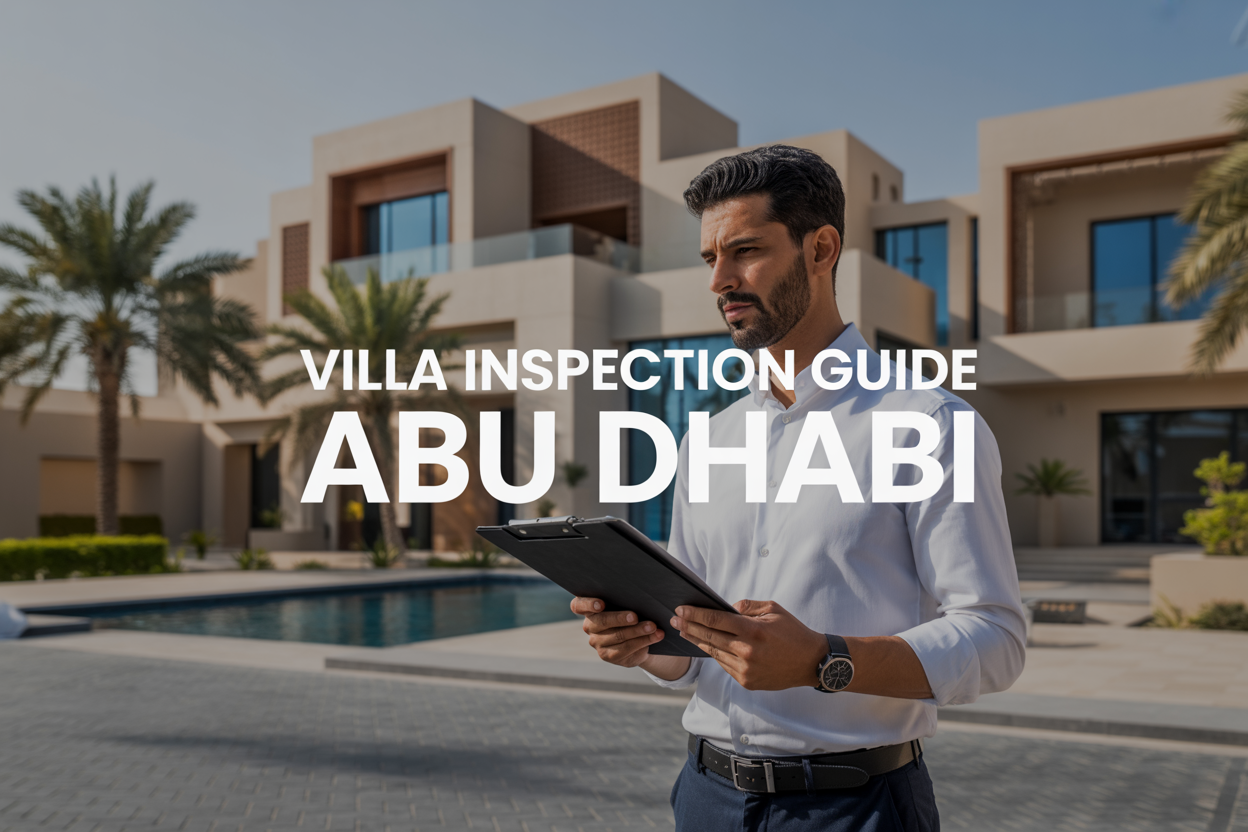
Buying or selling a villa in Abu Dhabi requires a thorough inspection to protect your investment and avoid costly surprises. This comprehensive guide helps property buyers, sellers, and real estate investors navigate the villa inspection Abu Dhabi process with confidence.
Who This Guide Is For:
This resource is designed for first-time villa buyers, property investors, sellers preparing for market, and anyone involved in Abu Dhabi’s luxury real estate market who wants to make informed decisions.
What You’ll Learn:
We’ll walk you through Abu Dhabi’s specific villa inspection requirements and regulations that differ from other emirates. You’ll discover the essential components every comprehensive villa inspection should cover, from structural elements to luxury amenities. Finally, we’ll help you identify critical red flags that could signal expensive problems and show you exactly what steps to take after your inspection is complete.
Skip the guesswork and potential headaches – this guide gives you the knowledge to handle villa inspections like a pro in Abu Dhabi’s competitive property market.
Understanding Villa Inspection Requirements in Abu Dhabi

Legal Obligations for Property Buyers and Sellers
Property transactions in Abu Dhabi operate under a well-defined legal framework that places specific inspection responsibilities on both buyers and sellers. The Real Estate Regulatory Agency (RERA) has established comprehensive guidelines that make villa inspection Abu Dhabi processes mandatory for most property transfers.
Buyers carry the primary responsibility for conducting due diligence inspections before finalizing any villa purchase. The law requires prospective buyers to verify the property’s structural integrity, safety systems, and compliance with local building codes. While sellers aren’t legally required to provide inspection reports, they must disclose any known defects or issues that could affect the property’s value or safety.
The legal framework also protects buyers through a cooling-off period following the initial purchase agreement. During this time, buyers can commission professional inspections and potentially withdraw from the transaction if significant issues are discovered. This period typically ranges from 7 to 14 days, depending on the specific terms outlined in the sales agreement.
Property developers and sellers must provide access to the villa for inspection purposes once a serious offer has been made. Refusing inspection access can be grounds for contract termination and may expose sellers to legal liability if undisclosed defects are later discovered.
Documentation requirements include maintaining inspection records for at least five years after the property transfer. Both parties must retain copies of all inspection reports, remediation certificates, and compliance documentation as part of their legal obligations.
International buyers face additional requirements, including obtaining approval from the relevant emirate authorities before completing the purchase. The inspection process becomes even more critical for foreign investors, as they may have limited recourse for post-purchase issues compared to UAE residents.
ADDC Regulations and Compliance Standards
Abu Dhabi Distribution Company (ADDC) maintains strict electrical infrastructure standards that directly impact villa inspection requirements. Every villa must undergo ADDC electrical compliance verification before occupancy permits are issued or renewed.
The ADDC inspection process covers several critical areas:
Electrical Load Assessment: Each villa’s electrical system must handle the designated load capacity without safety risks. Inspectors verify that circuit breakers, wiring gauge, and distribution panels meet current demand requirements plus a safety margin for future needs.
Safety Equipment Verification: ADDC requires functional safety equipment including:
- Ground fault circuit interrupters (GFCIs) in wet areas
- Arc fault circuit interrupters (AFCIs) for bedroom circuits
- Proper grounding systems throughout the property
- Emergency shut-off switches in accessible locations
Meter and Connection Standards: All electrical connections must comply with ADDC’s technical specifications. This includes proper meter installation, service entrance equipment, and connection to the distribution network. Non-compliant connections can result in service disconnection until corrections are made.
Energy Efficiency Requirements: Recent ADDC updates mandate energy efficiency assessments for villa inspections. Properties must demonstrate compliance with minimum efficiency standards through proper insulation, efficient HVAC systems, and appropriate lighting installations.
The inspection timeline for ADDC compliance typically requires 5-7 business days for standard residential properties. Complex villas with additional features like swimming pools, extensive outdoor lighting, or commercial-grade equipment may require extended inspection periods.
ADDC provides digital certification once inspections pass all requirements. This certification must be renewed periodically and is required for insurance claims, property sales, and renovation permits. The digital system allows property owners to access their compliance status and inspection history through ADDC’s online portal.
Non-compliance results in escalating consequences, starting with formal notices and potentially leading to service disconnection. Property owners receive 30 days to address minor violations and 60 days for major infrastructure issues before facing service interruption.
Municipality Approval Processes and Documentation
Abu Dhabi Municipality oversees the comprehensive approval process for villa inspections, covering structural, environmental, and safety compliance aspects beyond electrical systems. The municipality’s Department of Municipal Affairs coordinates with various specialized units to ensure complete property assessment.
Building Code Compliance: Municipal inspectors verify that villas meet current UAE building codes, including:
- Foundation integrity and load-bearing capacity
- Fire safety systems and emergency egress routes
- Ventilation and air quality standards
- Accessibility requirements for disabled access
- Setback compliance from property boundaries
Environmental Impact Assessment: The municipality requires environmental compliance verification for:
- Wastewater management systems
- Landscaping water usage and irrigation efficiency
- Swimming pool filtration and chemical treatment systems
- Waste disposal arrangements
- Noise pollution control measures
Documentation Requirements: Property owners must provide comprehensive documentation packages including:
| Document Type | Required Information | Validity Period |
|---|---|---|
| Original Building Permits | Construction authorization records | Permanent |
| As-Built Drawings | Current structural layout | Updated with modifications |
| Utility Certificates | Water, sewer, electrical approvals | 2-3 years |
| Safety Inspections | Fire, structural, environmental | Annual renewal |
| Insurance Certificates | Property and liability coverage | Annual renewal |
Digital Submission Process: The municipality has implemented an online portal system for inspection applications. Property owners can:
- Submit initial inspection requests electronically
- Track application progress in real-time
- Receive digital certificates upon approval
- Schedule follow-up inspections through the system
- Access historical inspection records
Specialized Inspection Categories: Different villa types require specific inspection approaches:
Standard Residential Villas: Basic structural, safety, and utility compliance checks with standard processing timelines.
Luxury Properties with Amenities: Enhanced inspections covering elevators, advanced security systems, spa facilities, and commercial-grade equipment installations.
Heritage or Modified Properties: Specialized assessments for properties with historical significance or major structural modifications requiring additional documentation and expert review.
The municipality coordinates with federal authorities for properties near sensitive areas like airports, military installations, or environmental reserves. These locations require additional clearances that can extend the inspection timeline significantly.
Timeline Requirements for Completing Inspections
Villa inspection Abu Dhabi timelines depend on multiple factors including property complexity, inspector availability, and regulatory processing requirements. Understanding these timelines helps buyers and sellers plan their transactions effectively.
Standard Inspection Scheduling: Basic villa inspections typically require 7-10 business days from application submission to completion. This timeline assumes:
- No complex systems requiring specialized testing
- Standard utility connections and municipal compliance
- Available inspector scheduling within normal business hours
- Clear property access without scheduling conflicts
Comprehensive Inspection Timelines: Properties requiring detailed assessments may need 14-21 business days:
- Multiple utility company inspections (ADDC, ADWEA, Etisalat)
- Structural engineering assessments for older properties
- Environmental impact evaluations for large estates
- Swimming pool and recreational facility inspections
Expedited Processing Options: Some inspection services offer accelerated timelines for additional fees:
- 3-5 business day processing for urgent transactions
- Weekend and evening inspection appointments
- Priority scheduling during peak buying seasons
- Emergency inspections for insurance or legal requirements
Seasonal Considerations: Inspection timelines vary significantly based on seasonal demand:
Peak Season (October-April):
- Extended scheduling delays of 2-3 weeks common
- Higher inspection fees due to demand
- Limited availability for expedited services
- Increased coordination challenges with multiple inspectors
Off-Season (May-September):
- Faster scheduling within 5-7 days typically available
- More competitive inspection pricing
- Greater flexibility for timing requests
- Easier coordination between different inspection specialists
Re-inspection Requirements: Failed inspections create additional timeline considerations:
- Initial correction period: 30-45 days for most issues
- Re-inspection scheduling: 5-7 business days after corrections
- Multiple failed attempts may require complete reassessment
- Major structural issues could extend timelines by several months
Documentation Processing: Final certification processing adds additional time requirements:
- Municipal review and approval: 5-10 business days
- ADDC electrical certification: 3-5 business days
- Final documentation compilation: 2-3 business days
- Digital certificate issuance: Same day once approved
Transaction Integration: Inspection timelines must align with broader property transaction schedules:
- Mortgage approval processes often run parallel to inspections
- Title transfer procedures require completed inspection certificates
- Insurance policy activation depends on inspection results
- Occupancy permits cannot be issued without full compliance
Property owners can minimize timeline delays by preparing documentation in advance, ensuring clear property access, and addressing any known issues before formal inspection requests. Working with experienced real estate professionals who understand local inspection requirements also helps streamline the process and avoid common scheduling conflicts.
The inspection process represents a critical phase in villa ownership transfer, requiring careful coordination between buyers, sellers, inspectors, and regulatory authorities. Proper timeline planning ensures smooth transactions while maintaining compliance with all applicable standards and requirements.
Essential Components of a Comprehensive Villa Inspection
Structural Integrity Assessment and Foundation Checks
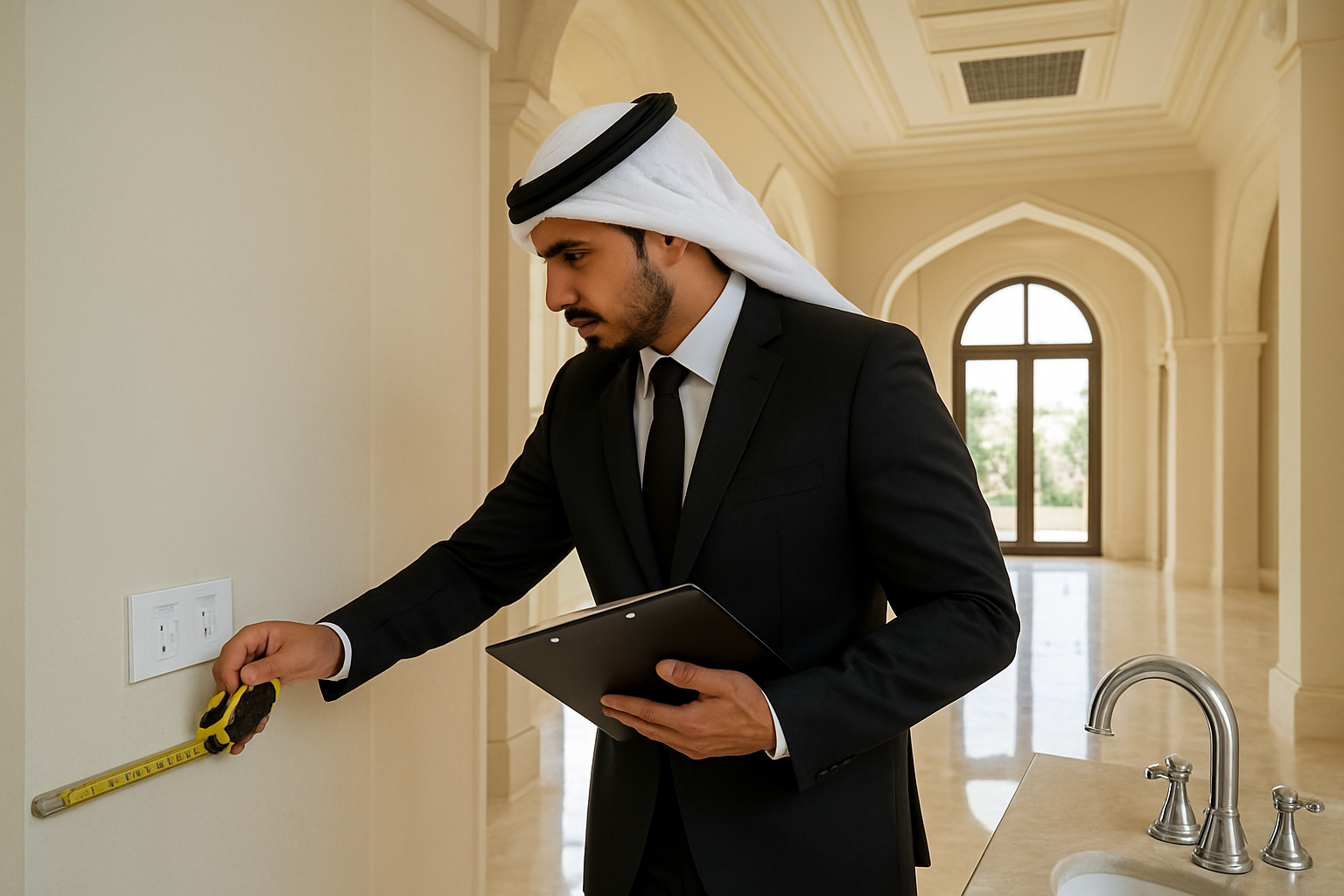
The foundation serves as the backbone of any villa, making structural assessments the most critical component of any villa inspection Abu Dhabi property owners should prioritize. Professional inspectors examine load-bearing walls, support beams, and the foundation itself for signs of settlement, cracking, or deterioration that could compromise the entire structure.
Foundation inspections begin with exterior perimeter checks, where inspectors look for cracks in concrete slabs, uneven settling, or gaps between the foundation and walls. Interior assessments focus on floor levelness, wall alignment, and ceiling integrity. Inspectors use specialized equipment like laser levels and moisture meters to detect problems invisible to the naked eye.
Common structural issues in Abu Dhabi villas include thermal expansion damage due to extreme temperature fluctuations, sand infiltration affecting foundation stability, and water damage from occasional heavy rainfall. Inspectors examine expansion joints, check for proper drainage systems, and assess whether the villa’s design adequately handles the region’s unique climate challenges.
Professional structural assessments also evaluate the condition of concrete reinforcement bars (rebar) within walls and foundations. In Abu Dhabi’s coastal environment, salt air can accelerate corrosion of metal components, potentially weakening structural integrity over time. Inspectors use specialized detection equipment to assess rebar condition without damaging existing structures.
The inspection covers architectural elements like arches, columns, and decorative features that may affect structural stability. Many Abu Dhabi villas feature elaborate architectural designs that require specific expertise to evaluate properly. Inspectors assess whether these elements are purely aesthetic or if they serve load-bearing functions that could impact overall structural integrity.
Electrical Systems Safety and Functionality Review
Electrical system evaluation represents a crucial safety component of comprehensive villa inspections, particularly given Abu Dhabi’s high electricity demands for cooling systems and modern appliances. Inspectors examine the main electrical panel, circuit breakers, wiring throughout the villa, and grounding systems to ensure everything meets current safety standards.
The inspection process includes testing all outlets, switches, and fixtures throughout the property. Inspectors use specialized equipment to measure electrical loads, check for proper grounding, and identify potential fire hazards like overloaded circuits or outdated wiring. They also verify that Ground Fault Circuit Interrupter (GFCI) outlets are properly installed in bathrooms, kitchens, and outdoor areas.
Modern Abu Dhabi villas often feature complex electrical systems supporting smart home technology, security systems, and high-powered HVAC units. Inspectors evaluate whether the electrical infrastructure can handle these demands safely and efficiently. They check for proper installation of dedicated circuits for major appliances and assess the capacity of the main electrical service.
Code compliance represents another critical aspect of electrical inspections. Abu Dhabi follows specific electrical codes that may differ from international standards, and inspectors verify that all work meets local requirements. This includes checking for proper permits for any electrical modifications and ensuring that all installations follow approved practices.
Safety features like smoke detectors, carbon monoxide alarms, and emergency lighting systems receive thorough testing during electrical inspections. Inspectors verify that these systems are properly connected, functional, and meet local fire safety requirements. They also check that backup power systems, if present, operate correctly and provide adequate coverage.
Plumbing and Water System Evaluation
Water system assessments encompass all plumbing components from main water lines to individual fixtures, with particular attention to Abu Dhabi’s unique water quality and pressure challenges. Inspectors examine supply lines, drainage systems, water heaters, and filtration equipment to ensure proper function and identify potential problems before they become costly repairs.
The evaluation begins with water pressure testing throughout the villa, checking that all fixtures receive adequate flow rates. Inspectors test hot water delivery times, examine water heater condition and capacity, and verify proper installation of pressure relief valves and expansion tanks. They also assess whether the system can handle peak demand periods when multiple fixtures operate simultaneously.
Drainage system inspection includes testing all sinks, toilets, showers, and floor drains for proper flow and adequate venting. Inspectors check for signs of blockages, inadequate slope in drain lines, or ventilation problems that could cause sewer gas infiltration. They also examine the main sewer connection and verify that the property’s drainage system connects properly to municipal services.
Water quality assessment forms an important part of plumbing inspections in Abu Dhabi, where desalinated water and varying mineral content can affect plumbing systems differently than in other regions. Inspectors check for signs of corrosion, mineral buildup, or filtration system problems that could impact water quality or damage plumbing components over time.
Leak detection represents a major focus area, with inspectors using specialized equipment to identify hidden leaks in walls, under slabs, or in underground supply lines. Even small leaks can cause significant damage in Abu Dhabi’s climate, where humidity and temperature extremes can accelerate deterioration of building materials.
HVAC System Performance Testing
Climate control systems deserve intensive scrutiny in Abu Dhabi villa inspections due to the extreme weather conditions and high cooling demands throughout most of the year. Inspectors evaluate air conditioning units, ductwork, ventilation systems, and controls to ensure optimal performance and energy efficiency.
Comprehensive HVAC testing includes measuring cooling capacity, checking refrigerant levels, and assessing airflow distribution throughout the villa. Inspectors examine each air handling unit, test thermostats and control systems, and verify that the system provides adequate cooling to all areas of the property. They also check for proper installation of zone controls that allow different temperature settings in various areas.
Ductwork inspection involves checking for leaks, proper insulation, and adequate sizing to deliver conditioned air effectively. Inspectors examine supply and return ducts, verify proper sealing at joints and connections, and assess whether the ductwork layout provides balanced airflow throughout the villa. They also check that ducts are properly supported and protected from damage.
Air quality assessment includes testing filtration systems, examining indoor air circulation, and checking for adequate fresh air intake. Inspectors verify that HVAC systems maintain proper humidity levels and provide sufficient ventilation to prevent indoor air quality problems. They also examine exhaust fans in bathrooms and kitchens to ensure proper moisture removal.
Energy efficiency evaluation covers system performance ratings, proper sizing for the villa’s square footage, and assessment of programmable controls that can reduce energy consumption. Inspectors check that equipment meets current energy standards and identify opportunities for efficiency improvements that could reduce operating costs.
Exterior Elements and Landscaping Examination
External villa components face constant exposure to Abu Dhabi’s harsh climate conditions, making thorough exterior inspections essential for identifying current problems and preventing future damage. Inspectors examine roofing systems, exterior walls, windows, doors, and landscaping elements that could affect the property’s condition and value.
Roofing system evaluation includes checking for loose or damaged tiles, examining flashing around penetrations, and assessing gutter and downspout condition. Inspectors look for signs of water intrusion, proper drainage design, and adequate ventilation in attic spaces. They also verify that roof-mounted equipment like HVAC units and solar panels are properly installed and sealed.
Exterior wall assessment covers stucco, paint, siding, and masonry elements for signs of cracking, deterioration, or water damage. Inspectors pay special attention to expansion joints, window and door seals, and areas where different materials meet. They also examine architectural features like balconies, decorative elements, and exterior staircases for structural integrity and safety.
Window and door inspection includes testing operation, checking seals and weatherstripping, and assessing security features. Inspectors verify that all exterior openings close properly, provide adequate weather protection, and meet security requirements. They also examine screens, shutters, and other protective elements common in Abu Dhabi properties.
Landscaping evaluation extends beyond aesthetics to identify elements that could affect the villa’s structure or maintenance requirements. Inspectors check that irrigation systems operate properly without causing water damage to structures, assess tree placement relative to foundations and utilities, and examine hardscaping elements like patios, walkways, and retaining walls.
Pool and spa systems, common features in Abu Dhabi villas, receive comprehensive evaluation including equipment condition, safety features, and compliance with local regulations. Inspectors test filtration and circulation systems, examine pool surfaces and surrounding areas, and verify that safety equipment and barriers meet current standards.
Choosing the Right Villa Inspector in Abu Dhabi

Certification Requirements and Professional Credentials
Finding a qualified villa inspector in Abu Dhabi starts with checking their certification and credentials. The UAE has specific requirements that inspectors must meet to operate legally in the emirates.
Your inspector should hold certification from recognized international bodies like the American Society of Home Inspectors (ASHI), the International Association of Certified Home Inspectors (InterNACHI), or the National Association of Home Inspectors (NAHI). These organizations maintain strict standards and require ongoing education to keep certifications current.
Local certification through the Abu Dhabi Municipality or relevant UAE authorities adds another layer of credibility. Some inspectors also hold engineering degrees in civil, structural, or mechanical disciplines, which provides deeper technical knowledge of building systems and construction methods.
Professional licensing requirements vary depending on the type of inspection service. Electrical system inspections require licensed electrical engineers, while structural assessments need certified structural engineers. Make sure your inspector has the appropriate licenses for the specific areas they’ll be evaluating.
Check for membership in professional associations. Active members typically stay updated on industry best practices, new technologies, and changing regulations. They also commit to following codes of ethics that protect your interests as a client.
Don’t forget about continuing education requirements. The best inspectors regularly attend workshops, seminars, and training programs to stay current with evolving building technologies and inspection methods. This ongoing learning directly benefits the quality of service you receive.
Ask potential inspectors about their background and training. Those with construction, engineering, or architecture backgrounds often bring valuable hands-on experience to their inspections. Military veterans with relevant technical training also make excellent inspectors due to their attention to detail and systematic approach.
Experience with Local Building Codes and Regulations
Abu Dhabi has unique building codes and regulations that differ from other international markets. Your villa inspection in Abu Dhabi requires someone who knows these local requirements inside and out.
The UAE Fire and Life Safety Code of Practice, Abu Dhabi Building Code, and local municipality regulations all impact villa construction and safety standards. An experienced local inspector understands how these codes apply to different types of villa construction, from traditional Arabic architecture to modern contemporary designs.
Climate considerations play a huge role in Abu Dhabi villa construction. Inspectors familiar with the region understand how extreme heat, humidity, and occasional sandstorms affect building materials and systems. They know what to look for regarding thermal insulation, moisture control, and HVAC system performance in desert conditions.
Local construction practices and materials require specialized knowledge. Many villas use specific types of concrete, insulation, and roofing materials designed for the Gulf climate. An experienced inspector recognizes quality installation versus shortcuts that could cause problems later.
Water and electrical systems in Abu Dhabi follow specific standards and connection protocols. Your inspector should understand ADEWA (Abu Dhabi Water and Electricity Authority) requirements, grounding systems suitable for local conditions, and water pressure standards throughout the emirate.
Swimming pools and outdoor features are common in Abu Dhabi villas and require specialized inspection knowledge. Pool equipment, water circulation systems, and safety features must meet local safety standards. Outdoor kitchens, landscaping irrigation, and shade structures also need proper evaluation.
Look for inspectors who have worked in Abu Dhabi for several years and can provide references from recent local projects. They should be familiar with common issues in different villa communities and neighborhoods throughout the emirate.
Ask about their experience with various villa types, from older established communities to newer developments. Different construction periods and developers often have specific characteristics and potential issues that experienced local inspectors recognize immediately.
Insurance Coverage and Liability Protection
Professional liability insurance protects both you and the inspector during the villa inspection process. This coverage is essential when dealing with property transactions worth millions of dirhams.
Verify that your inspector carries errors and omissions (E&O) insurance with adequate coverage limits. This insurance protects against financial losses if the inspector misses significant defects or makes errors in their assessment. Coverage should be substantial enough to handle potential claims related to villa values in Abu Dhabi’s premium real estate market.
General liability insurance covers accidents or property damage that might occur during the inspection process. While rare, inspectors sometimes need to move items, access tight spaces, or use equipment that could potentially cause damage. This coverage protects your property during the inspection.
Professional indemnity insurance provides additional protection against claims arising from professional services. This coverage specifically addresses situations where inspection advice or recommendations lead to financial losses.
Ask to see current insurance certificates and verify coverage dates. Insurance should be current and not set to expire soon after your inspection. Some policies have waiting periods or exclusions that could affect coverage for your specific situation.
Check the insurance company’s reputation and financial stability. Insurance is only valuable if the company can actually pay claims when needed. Well-established insurance providers offer more reliable protection.
Understand what the insurance covers and what it excludes. Some policies have specific exclusions for certain types of inspections, environmental issues, or pre-existing conditions. Know these limitations before hiring an inspector.
Consider asking about additional coverage options. Some inspectors offer extended warranties or guarantee programs that provide extra protection beyond basic insurance coverage. These programs might cover return visits or additional testing if issues arise shortly after the inspection.
Cost Comparison and Value Assessment
Villa inspection pricing in Abu Dhabi varies significantly based on property size, inspection scope, and inspector qualifications. Understanding these factors helps you make informed decisions about inspection services.
Basic villa inspections typically start around AED 2,000-3,000 for standard properties, but comprehensive inspections for luxury villas can cost AED 8,000-15,000 or more. The size and complexity of your villa directly impact pricing, with larger properties requiring more time and effort to inspect thoroughly.
Specialized testing adds to the base inspection cost. Swimming pool inspections, air quality testing, thermal imaging, electrical system analysis, and structural assessments each carry additional fees. While these services increase the total cost, they provide valuable insights that could save thousands in future repairs.
Compare inspection packages carefully. Some inspectors offer all-inclusive packages that cover standard inspections plus common additional services. Others use a la carte pricing where each service is separately charged. Calculate total costs for the complete inspection scope you need.
Geographic location within Abu Dhabi affects pricing. Inspections in remote areas or exclusive island communities may carry travel surcharges. Urban villa inspections are typically more competitively priced due to inspector availability and lower travel costs.
Timing impacts costs as well. Rush inspections needed within 24-48 hours often carry premium pricing. Weekend and holiday inspections may also cost more than standard weekday services. Planning ahead gives you more pricing options and inspector availability.
Don’t automatically choose the lowest bid. Extremely low prices often indicate corners being cut, limited experience, or inadequate insurance coverage. The cheapest inspection could end up being the most expensive if significant issues are missed.
Consider the inspection report quality and format. Comprehensive reports with photographs, detailed descriptions, and prioritized recommendations provide much more value than basic checklists. Digital reports with searchable content and embedded photos are more useful for future reference.
Calculate potential savings from thorough inspections. A comprehensive villa inspection Abu Dhabi that identifies major issues before purchase can save you tens of thousands of dirhams in unexpected repairs. The inspection cost becomes insignificant compared to these potential savings.
Factor in the inspector’s availability for follow-up questions and clarifications. Some inspectors include post-inspection consultations in their pricing, while others charge separately for additional time. This ongoing support can be valuable during negotiations or repair planning.
Evaluate the total value proposition rather than just comparing prices. An experienced, well-credentialed inspector with comprehensive insurance and detailed reporting provides much better value than cheaper alternatives with limited qualifications or coverage.
Request detailed quotes that break down all services and potential additional costs. This transparency helps you compare different inspectors accurately and budget properly for the complete inspection process.
Consider group discounts if you’re purchasing multiple properties or working with other buyers in the same community. Some inspectors offer reduced rates for multiple inspections scheduled together.
Review payment terms and cancellation policies. Flexible payment options and reasonable cancellation terms indicate professional service standards and customer-focused business practices.
Preparing Your Villa for Professional Inspection

Access Preparation and Key Arrangements
Getting your villa ready for a professional inspection starts with ensuring the inspector can actually get into every corner of your property. This might sound obvious, but you’d be surprised how many homeowners forget about locked storage rooms or misplace keys to crucial areas right before their inspection day.
Start by doing a walk-through of your entire property at least a week before the scheduled villa inspection Abu Dhabi appointment. Make a checklist of every room, closet, storage area, garage, basement, attic, and outdoor structure that needs to be accessible. Don’t forget about those spaces you rarely visit – the mechanical room, utility closets, or that storage shed in the backyard that’s been locked for months.
Collect all necessary keys and make sure they’re properly labeled. Create a master key ring with clear tags indicating which key opens what. Include keys for the main house, all interior rooms, exterior gates, storage buildings, pool equipment areas, and any other locked spaces. Test every single key before the inspection day to avoid awkward moments where you’re fumbling around trying to figure out which key opens the basement door.
If you’ve recently changed locks or installed new security systems, double-check that you have the updated access codes and keys. Many homeowners forget they’ve changed their garage door codes or upgraded their security systems, only to realize during the inspection that they can’t provide access to important areas.
Consider any special access requirements your property might have. Does your villa have a separate guest house or staff quarters? Are there multiple levels with different entry points? Some luxury villas in Abu Dhabi feature elaborate security systems with multiple access points that might require specific procedures to unlock. Make sure you understand how to operate all these systems and can explain them to the inspector.
Clear pathways to all areas that need inspection. Remove any furniture, storage boxes, or personal items that might block access to electrical panels, HVAC systems, water heaters, or structural elements. Inspectors need to physically examine these components, and obstacles will either prevent proper inspection or slow down the process considerably.
If your villa has any areas that require special safety equipment or precautions, prepare accordingly. Some properties have deep utility areas, high ceiling spaces, or areas with potential hazards that might require special ladders or safety gear. While professional inspectors come prepared with their own equipment, knowing about these challenges ahead of time helps everyone stay safe and efficient.
Arrange for any special access permissions if your villa is part of a gated community or compound. Some developments require advance notification for service providers or have specific protocols for allowing inspectors onto the property. Contact your property management or homeowners association to ensure there won’t be any access issues on inspection day.
Utility Activation and System Readiness
Having all your villa’s systems up and running before the inspection is absolutely critical for getting accurate results. Inspectors can’t properly evaluate systems that aren’t functioning, which could lead to incomplete assessments and potential problems being missed.
Start with your electrical systems. Make sure power is flowing to all areas of the villa, including any outbuildings, pool equipment, outdoor lighting, and security systems. Check that all circuit breakers are in the “on” position and that you haven’t accidentally left any major electrical components switched off. Walk through each room and test light switches, outlets, and any built-in electrical features.
Your HVAC system needs special attention since climate control is crucial in Abu Dhabi’s environment. Turn on your air conditioning systems at least 24-48 hours before the inspection to ensure they’re running properly. This gives the system time to reach optimal operating conditions and helps identify any issues that might not be apparent during a cold start. Check that air is flowing from all vents throughout the villa and that thermostats are responsive.
Don’t forget about heating systems if your villa has them. Even though Abu Dhabi’s climate rarely requires heating, some luxury properties include heating systems for certain areas or seasons. Test these systems to ensure they’re functional, as inspectors will want to verify all installed HVAC components.
Water systems require careful preparation. Turn on the main water supply and check that water pressure is adequate throughout the property. Test every faucet, shower, toilet, and water-using appliance. Run water for a few minutes in areas that haven’t been used recently to clear any stagnant water from the lines. This is particularly important if the villa has been vacant or if certain areas are used infrequently.
Check your hot water system thoroughly. Whether you have a traditional water heater, tankless system, or solar water heating, make sure it’s producing hot water at proper temperatures. Run hot water at several fixtures to verify the system can meet demand and that water reaches appropriate temperatures within reasonable time frames.
Pool and spa systems need activation if your villa includes these features. Start up filtration systems, heaters, and any automated cleaning or chemical management systems. These components represent significant investments and potential maintenance issues, so inspectors will want to see them operating properly.
Test all security and automation systems. Modern villas often include sophisticated home automation, security cameras, alarm systems, and smart home features. Make sure these systems are powered up and functioning correctly. If you have any smart home integrations, ensure they’re connected and responsive.
Verify that gas systems are active if your villa uses natural gas or propane for cooking, heating, or other purposes. Check that gas is flowing to all appliances and that pilot lights are lit where appropriate. Safety is paramount with gas systems, so if you notice any unusual odors or suspect any problems, address them immediately rather than waiting for the inspection.
Documentation Gathering and Property History Review
Assembling comprehensive documentation before your villa inspection creates a complete picture of your property’s history and current condition. This information helps inspectors understand what they’re looking at and can highlight areas that might need special attention.
Start by gathering all original construction documents if you’re the original owner or if these were passed down from previous owners. Architectural plans, engineering reports, soil studies, and building permits provide valuable context about how your villa was designed and built. These documents can reveal important details about structural systems, foundation types, and original specifications that might not be obvious during a visual inspection.
Collect all maintenance records and receipts for major work performed on the villa. This includes HVAC service records, electrical updates, plumbing repairs, roofing work, and any structural modifications. Organize these chronologically and by system type so inspectors can quickly understand the maintenance history of different components. Regular maintenance records often indicate well-cared-for systems, while gaps in documentation might suggest areas of concern.
Document any renovations, additions, or modifications made to the original structure. Include permits, contractor information, and completion certificates for any work performed. This is particularly important in Abu Dhabi where building regulations are strictly enforced and unpermitted work can create significant issues. If you’ve made changes to electrical, plumbing, or structural systems, having proper documentation proves the work was done legally and to code.
Gather warranty information for all major systems and appliances. HVAC equipment, water heaters, electrical panels, roofing materials, windows, and appliances often come with significant warranties that transfer to new owners. Having this information readily available adds value and provides peace of mind about covered components.
Compile utility bills and consumption records for the past year or two. These records help establish baseline performance for electrical, water, and gas systems. Unusual spikes in consumption might indicate efficiency problems or hidden leaks that warrant closer inspection. In Abu Dhabi’s climate, energy consumption patterns can reveal important information about HVAC efficiency and building envelope performance.
Document any known issues or ongoing concerns with the property. Create a written list of anything you’ve noticed that might need attention – unusual sounds, minor leaks, electrical quirks, or cosmetic issues. Being upfront about known problems demonstrates transparency and helps inspectors focus their attention appropriately.
Collect information about your villa’s environmental systems and features. If you have solar panels, water recycling systems, smart home technology, or other specialized features, gather documentation about their installation, operation, and maintenance requirements. These systems add value but also require specific knowledge to inspect properly.
Include property surveys and boundary documentation. Legal surveys, easement information, and boundary markers help establish exactly what’s included in the property and identify any potential boundary or access issues. This is particularly important for villas with extensive grounds or those located near community boundaries.
Prepare a timeline of major events or changes to the property. Include move-in dates, major weather events, any flooding or damage incidents, and significant repairs or improvements. This historical context helps inspectors understand the property’s story and identify areas that might need extra attention based on past events.
Organize insurance claims and damage reports if your villa has experienced any significant issues. Storm damage, flooding, electrical problems, or other insurable events leave lasting impacts on properties. Having documentation about what happened and how it was addressed provides important context for current conditions.
Create a simple property fact sheet with basic information about your villa’s systems and features. Include details like the age and type of HVAC systems, electrical panel specifications, water heater type and age, roofing materials, and any unique features or recent upgrades. This reference sheet helps inspectors quickly understand what they’re looking at and can speed up the inspection process.
Critical Red Flags to Watch During Villa Inspections
Foundation Cracks and Structural Warning Signs
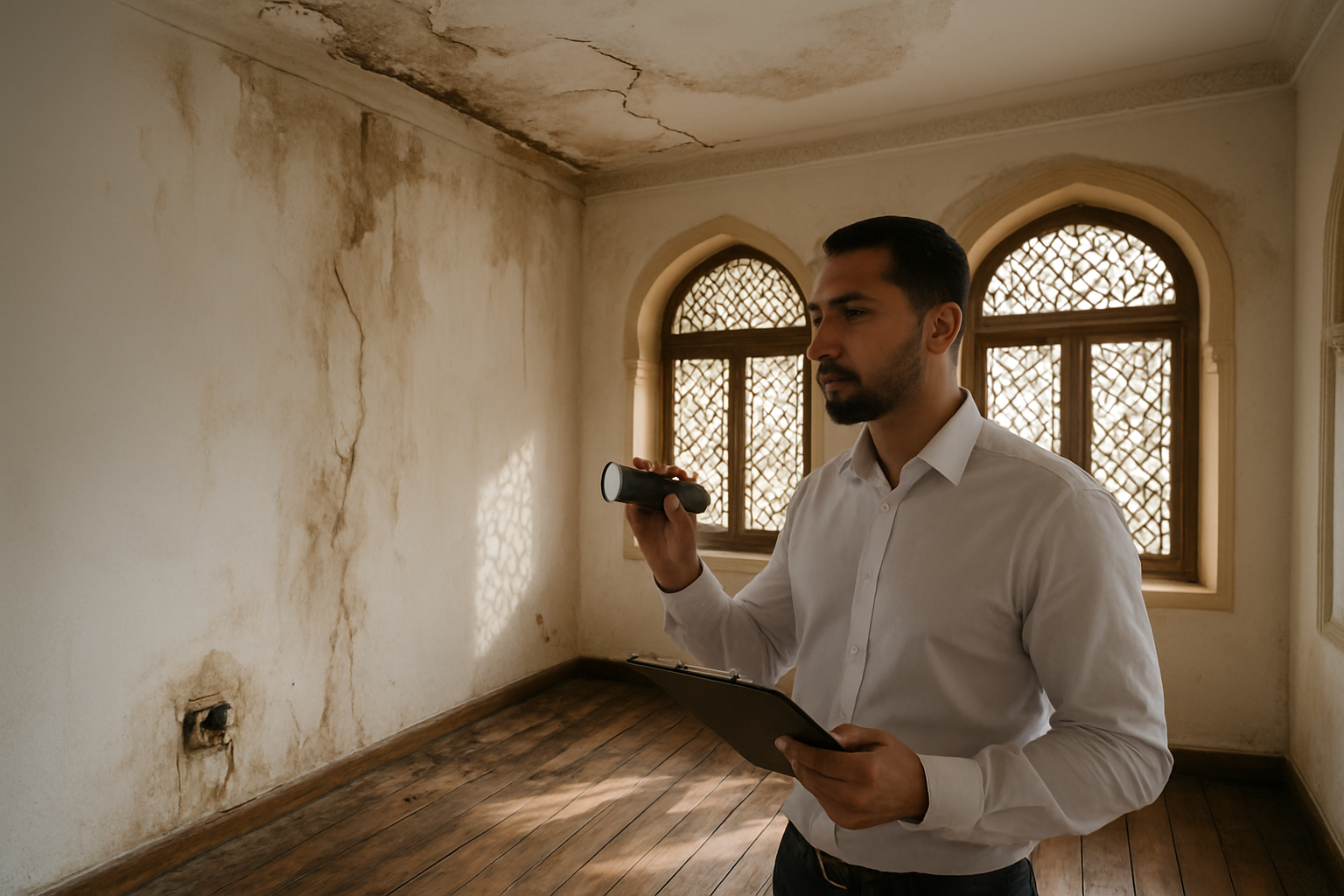
Your villa’s foundation serves as the backbone of the entire structure, and spotting foundation problems early can save you from catastrophic repairs down the line. In Abu Dhabi’s challenging climate, where extreme heat and occasional sandstorms put additional stress on buildings, foundation issues require immediate attention during any villa inspection Abu Dhabi process.
Horizontal Cracks: The Most Serious Concern
Horizontal cracks running along foundation walls signal severe structural compromise. These cracks typically indicate that soil pressure is pushing against the foundation wall with excessive force. In Abu Dhabi’s sandy soil conditions, improper drainage can cause soil expansion that creates this dangerous lateral pressure. Horizontal cracks wider than 1/4 inch demand immediate structural engineering assessment.
Vertical Cracks: Assessing the Severity
While vertical cracks appear less threatening than horizontal ones, they still require careful evaluation. Hair-thin vertical cracks measuring less than 1/8 inch often result from normal concrete settling and rarely pose structural threats. However, vertical cracks exceeding 1/4 inch width, especially those that widen toward the top or bottom, suggest foundation movement that needs professional attention.
Stair-Step Cracks in Block Foundations
Many villas in Abu Dhabi feature concrete block foundations, where stair-step cracks following mortar joints indicate differential settling. These cracks form when different sections of the foundation settle at varying rates, creating a stepped pattern along the mortar lines. Stair-step cracks wider than 1/4 inch or those accompanied by wall bulging require immediate structural evaluation.
Foundation Settlement Warning Signs
Beyond visible cracks, several indicators point to foundation settlement issues:
- Doors and windows that stick or won’t close properly
- Gaps appearing around door and window frames
- Cracks in interior walls, particularly at corners
- Sloping or uneven floors
- Gaps between walls and ceilings
- Exterior walls pulling away from the structure
Soil-Related Foundation Problems
Abu Dhabi’s unique soil composition creates specific foundation challenges. Expansive clay soils can swell dramatically during rare rainfall events, then shrink during dry periods, causing cyclical foundation movement. Sandy soils, while generally stable, can shift if water infiltration occurs around the foundation perimeter.
Inspection Tools and Techniques
Professional inspectors use specialized equipment to assess foundation integrity:
- Laser levels to measure floor elevation variations
- Crack monitoring devices to track movement over time
- Moisture meters to detect water infiltration
- Ground-penetrating radar for subsurface analysis
Water Damage Indicators and Moisture Problems
Water damage ranks among the most destructive forces affecting villa structures in Abu Dhabi. Despite the region’s arid climate, water infiltration occurs through various sources including plumbing leaks, HVAC condensation, and occasional heavy rainfall events that overwhelm drainage systems.
Identifying Water Stains and Discoloration
Water stains appear as brown, yellow, or dark patches on ceilings, walls, and floors. Fresh water damage often shows as darker, wet-looking spots, while older damage creates ring-shaped stains with darker edges. Pay special attention to areas around:
- Bathroom fixtures and shower enclosures
- Kitchen sinks and appliance connections
- Air conditioning units and ductwork
- Roof penetrations and skylights
- External wall penetrations for utilities
Mold and Mildew Growth Patterns
Abu Dhabi’s high humidity levels, especially during summer months, create ideal conditions for mold growth when combined with water infiltration. Mold appears as black, green, or white fuzzy growth on surfaces, often accompanied by a musty odor. Common mold locations include:
- Behind bathroom tiles and around shower areas
- Under kitchen sinks and around dishwashers
- Near air conditioning vents and ductwork
- In basement or ground-level storage areas
- Around window frames and sliding doors
Structural Moisture Damage Signs
Prolonged moisture exposure causes serious structural deterioration:
Wood Rot and Decay
- Soft, spongy wood that compresses under pressure
- Wood that appears darker or has a different texture
- Visible fungal growth on wooden surfaces
- Crumbling or flaking wood material
Metal Corrosion
- Rust stains on metal fixtures and structural elements
- Pitting or scaling on metal surfaces
- White, chalky deposits on aluminum components
- Weakened metal connections and fasteners
Concrete and Masonry Damage
- Efflorescence (white, chalky deposits) on concrete surfaces
- Spalling concrete with exposed aggregate
- Deteriorating mortar joints in masonry walls
- Cracks following moisture infiltration patterns
Hidden Moisture Detection Methods
Professional moisture detection requires specialized equipment:
- Infrared thermal cameras reveal temperature variations indicating moisture
- Moisture meters provide precise readings in various materials
- Humidity sensors monitor ambient moisture levels
- Borescopes allow inspection inside wall cavities
HVAC-Related Moisture Issues
Air conditioning systems in Abu Dhabi work overtime, creating significant condensation that can cause water damage if not properly managed:
- Clogged condensate drains causing water backup
- Inadequate insulation on ductwork creating condensation
- Oversized AC units creating humidity control problems
- Improperly installed drain pans allowing water overflow
Electrical Hazards and Safety Violations
Electrical systems in Abu Dhabi villas must withstand extreme temperatures and demanding usage patterns from air conditioning systems. Electrical hazards pose immediate safety risks including fire, electrocution, and property damage.
Outdated Electrical Panels and Components
Many older villas feature electrical panels that don’t meet current safety standards or capacity requirements:
Obsolete Panel Types
- Federal Pacific panels (known fire hazards)
- Zinsco panels with documented failure rates
- Fuse boxes lacking modern safety features
- Panels without proper grounding systems
Inadequate Electrical Capacity
Modern villas require substantial electrical capacity for multiple air conditioning units, kitchen appliances, and electronic devices. Warning signs of inadequate capacity include:
- Frequent circuit breaker tripping
- Flickering lights when appliances start
- Warm outlet covers or switch plates
- Burning odors from electrical components
Dangerous Wiring Conditions
Aluminum Wiring Issues
Aluminum wiring, common in older constructions, creates fire hazards due to thermal expansion and oxidation:
- Connections that loosen over time
- Overheating at junction points
- Incompatibility with copper fixtures
- Increased fire risk at connection points
Knob and Tube Wiring
This obsolete wiring method lacks modern safety features:
- No equipment grounding
- Inadequate insulation
- Fire hazard from overloading
- Insurance coverage limitations
Extension Cord Dependencies
Excessive extension cord usage indicates inadequate outlet placement:
- Permanent use of extension cords
- Daisy-chaining multiple extension cords
- Running cords under carpets or through walls
- Overloaded extension cords showing heat damage
GFCI and AFCI Protection Deficiencies
Ground Fault Circuit Interrupter (GFCI) and Arc Fault Circuit Interrupter (AFCI) protection prevents electrocution and fires:
Required GFCI Locations:
- Bathrooms and wet areas
- Kitchen countertop outlets
- Outdoor outlets and pool areas
- Garage and utility room outlets
- Basement and crawl space outlets
AFCI Protection Requirements:
- Bedroom circuits
- Living area circuits
- Dining room circuits
- Family room circuits
Electrical Code Violations
Common code violations in Abu Dhabi villas include:
- Insufficient outlet spacing (outlets should be within 6 feet of any wall point)
- Missing electrical permits for modifications
- Improper junction box installations
- Exposed wiring in finished areas
- Inadequate clearance around electrical panels
Pool and Outdoor Electrical Hazards
Outdoor electrical installations face unique challenges in Abu Dhabi’s climate:
- Pool equipment lacking proper bonding and grounding
- Outdoor outlets without weatherproof covers
- Lighting fixtures not rated for outdoor use
- Underground wiring without proper protection
- Inadequate separation between electrical and water features
Poor Ventilation and Air Quality Issues
Proper ventilation becomes critical in Abu Dhabi’s extreme climate where buildings remain sealed for extended periods due to air conditioning usage. Poor ventilation creates health hazards, increases energy costs, and accelerates building deterioration.
Inadequate Fresh Air Exchange
Modern villas require mechanical ventilation systems to maintain healthy indoor air quality:
Ventilation Rate Requirements
- Minimum 15 CFM (cubic feet per minute) of fresh air per person
- Kitchen exhaust rates of 100+ CFM
- Bathroom exhaust rates of 50+ CFM per fixture
- Whole-house ventilation meeting ASHRAE standards
Signs of Poor Air Exchange
- Persistent odors that won’t dissipate
- Condensation on windows and surfaces
- Stuffy or stale air sensation
- Increased allergy and respiratory symptoms
- Visible mold growth in living areas
Bathroom and Kitchen Ventilation Deficiencies
Bathroom Ventilation Problems:
- Exhaust fans that don’t remove moisture effectively
- Fans venting into attic spaces instead of outdoors
- Undersized fans for bathroom square footage
- Missing or non-functional exhaust fans
- Inadequate runtime after shower use
Kitchen Ventilation Issues:
- Range hoods that recirculate rather than exhaust
- Undersized exhaust capacity for cooking equipment
- Missing makeup air systems
- Grease accumulation in exhaust systems
- Blocked or damaged exhaust ducts
HVAC System Air Quality Problems
Dirty or Clogged Filters
Abu Dhabi’s dusty environment requires frequent filter changes:
- Reduced airflow from clogged filters
- Increased energy consumption
- Poor indoor air quality
- Premature equipment wear
- Bypass of filtration allowing dust circulation
Ductwork Contamination
- Accumulated dust and debris in ducts
- Mold growth in damp ductwork sections
- Pest infiltration through damaged ducts
- Missing or damaged duct insulation
- Leaky ducts reducing system efficiency
Specific Air Quality Hazards
Volatile Organic Compounds (VOCs)
- Off-gassing from building materials
- Cleaning product residues
- Paint and adhesive emissions
- Furniture and carpet off-gassing
- Inadequate ventilation to remove VOCs
Combustion Byproducts
- Carbon monoxide from faulty appliances
- Nitrogen oxides from gas appliances
- Backdrafting from inadequate combustion air
- Missing or non-functional CO detectors
Radon and Natural Contaminants
While less common in Abu Dhabi, basement areas may have:
- Elevated radon levels from soil
- Soil gases entering through foundation cracks
- Inadequate sub-slab ventilation systems
Air Quality Testing Methods
Professional air quality assessment uses various testing methods:
| Test Type | Purpose | Normal Ranges |
|---|---|---|
| Particle Count | Dust, allergens, pollutants | <10 particles/m³ (PM2.5) |
| VOC Testing | Chemical contaminants | <500 µg/m³ total VOCs |
| Humidity Levels | Moisture control | 30-50% relative humidity |
| CO Testing | Combustion safety | <9 ppm average |
| Mold Spore Count | Biological contamination | <1000 spores/m³ |
Ventilation System Improvements
Whole-House Ventilation Solutions:
- Energy Recovery Ventilators (ERVs)
- Heat Recovery Ventilators (HRVs)
- Balanced ventilation systems
- Demand-controlled ventilation
- Smart ventilation controls
Spot Ventilation Upgrades:
- High-efficiency bathroom fans
- Commercial-grade kitchen exhaust
- Automatic humidity-controlled fans
- Timer and motion-sensor controls
Regular air quality monitoring and ventilation system maintenance ensure healthy indoor environments in Abu Dhabi’s challenging climate conditions.
Post-Inspection Actions and Next Steps

Understanding Inspection Reports and Findings
Professional villa inspection Abu Dhabi reports can feel overwhelming when you first receive them. These documents typically span 20-50 pages and contain detailed assessments of every major system and component in your property. The key to making sense of these reports lies in understanding how inspectors categorize their findings and what each category means for your next steps.
Most inspection reports organize findings into three main categories: major defects, minor issues, and maintenance recommendations. Major defects require immediate attention and often involve safety concerns or structural problems. These might include electrical hazards, plumbing leaks causing water damage, or foundation issues. Minor issues typically involve cosmetic problems or components that function but show signs of wear. Maintenance recommendations cover routine upkeep items that don’t pose immediate risks but could become problems if neglected.
When reviewing your report, pay special attention to the inspector’s use of language. Terms like “immediate attention required,” “safety hazard,” or “recommend professional evaluation” signal serious concerns that need prompt action. Conversely, phrases like “monitor for changes,” “routine maintenance recommended,” or “cosmetic issue” indicate less urgent matters.
The report should include photographs documenting each finding. These visual references prove invaluable when discussing issues with contractors or during negotiations. Many inspectors now use digital reporting systems that allow you to click on specific areas of the property to see associated findings and photos.
Temperature readings, moisture levels, and other technical measurements provide objective data about your villa’s condition. Understanding these numbers helps you gauge the severity of issues. For example, elevated moisture readings in walls might indicate hidden water damage, while unusual temperature variations could suggest insulation problems or HVAC inefficiencies.
Don’t hesitate to contact your inspector for clarification on any findings you don’t understand. Reputable professionals welcome follow-up questions and can explain technical aspects in simpler terms. Some inspectors offer brief consultation calls included in their service fee to help clients interpret results.
Negotiating Repairs and Price Adjustments
Armed with your inspection report, you enter a critical phase where negotiation skills can save thousands of dirhams. The approach you take depends on whether you’re buying or selling, but the fundamental principles remain consistent: focus on facts, prioritize safety issues, and maintain reasonable expectations.
For buyers, the inspection report becomes your roadmap for negotiations. Start by categorizing findings based on cost and urgency. Major structural issues, electrical problems, or plumbing failures warrant serious discussion about price reductions or required repairs before closing. Minor cosmetic issues might be negotiable but shouldn’t derail an otherwise good deal.
Create a prioritized list with estimated repair costs. Research local contractor rates for each type of work needed. In Abu Dhabi’s market, electrical work typically ranges from 150-300 AED per hour, plumbing repairs vary from 200-500 AED depending on complexity, and HVAC maintenance runs 300-800 AED per service call. Having realistic cost estimates strengthens your negotiating position.
When presenting requests to sellers, structure your communication professionally. Group related issues together and explain how each affects the property’s value or habitability. Instead of demanding a blanket price reduction, consider requesting specific repairs or credits for documented problems. This approach shows you’ve done your homework and makes reasonable demands.
Sellers should review inspection findings objectively and consult with their real estate agents about market-standard responses. Some issues might be worth addressing before listing, while others could be better handled through price adjustments or repair credits. Consider the overall market conditions, your timeline constraints, and the property’s competitive position when deciding how to respond.
The negotiation process often involves multiple rounds of back-and-forth discussions. Stay flexible while protecting your core interests. Sometimes creative solutions emerge, such as splitting repair costs, providing home warranties, or adjusting closing dates to accommodate necessary work.
Document all agreements in writing as amendments to your purchase contract. Vague verbal agreements about repairs often lead to disputes later. Specify exactly what work will be completed, who will perform it, what materials will be used, and when the work must be finished.
Following Up on Critical Safety Issues
Safety-related findings from your villa inspection Abu Dhabi require immediate attention regardless of your buying or selling timeline. These issues can pose real risks to occupants and may violate local building codes or safety regulations.
Electrical hazards top the list of critical safety concerns. Problems like exposed wiring, overloaded circuits, missing ground fault circuit interrupters (GFCIs), or outdated electrical panels need professional evaluation within days of discovery. Contact licensed electricians who are familiar with Abu Dhabi’s electrical codes and can provide written assessments of needed repairs.
Gas system issues demand equally urgent attention. If your inspection reveals gas leaks, improper installations, or faulty connections, contact qualified technicians immediately. Many gas-related problems require permits and inspections from local authorities, so factor additional time into your planning.
Structural concerns like foundation cracks, support beam damage, or roof integrity problems need evaluation by structural engineers. These professionals can determine whether issues pose immediate safety risks or represent longer-term concerns requiring monitoring. Their reports often influence insurance coverage and may be required for certain types of financing.
Water damage and moisture problems can create health hazards through mold growth. If your inspection identifies significant moisture issues, consider hiring indoor air quality specialists to assess potential health risks. Remediation might be necessary before occupancy, especially for family members with respiratory sensitivities.
Fire safety systems including smoke detectors, carbon monoxide alarms, and emergency exits should be tested and brought up to current standards immediately. Abu Dhabi’s Civil Defence Authority has specific requirements for residential properties, and compliance isn’t optional.
Create a tracking system for addressing safety issues. Assign each problem a priority level, target completion date, and responsible party. Regular check-ins ensure progress continues and nothing falls through the cracks. For rental properties, tenant safety obligations make these follow-ups legally required, not just good practice.
Keep detailed records of all safety-related repairs including contractor licenses, permits obtained, inspection certificates, and warranty information. These documents prove valuable for insurance claims, future sales, or regulatory compliance questions.
Scheduling Re-inspections When Necessary
Re-inspections serve multiple purposes in the villa inspection process, from verifying repair completions to monitoring developing issues over time. Understanding when and how to schedule these follow-up assessments protects your investment and ensures peace of mind.
The most common re-inspection scenario occurs after repairs have been completed but before finalizing a property transaction. If your initial inspection revealed significant problems that the seller agreed to fix, a re-inspection confirms the work was completed properly. This verification step prevents surprises at closing and ensures you receive the property in the expected condition.
Schedule re-inspections for 24-48 hours before your planned closing date. This timing allows for last-minute corrections if problems are discovered while still maintaining your closing schedule. Choose the same inspector who performed the original assessment when possible, as they’re already familiar with the property’s specific issues and can efficiently verify repairs.
For major repairs involving electrical, plumbing, or structural work, consider requesting documentation from licensed contractors before scheduling re-inspections. Permits, inspection certificates from local authorities, and warranty information should be available for review. This paperwork helps inspectors focus their attention on specific areas and ensures compliance with local codes.
Seasonal re-inspections make sense for certain types of properties, especially those with pools, extensive landscaping, or complex HVAC systems. Abu Dhabi’s climate creates different stresses on buildings throughout the year, and problems that aren’t apparent during one season might emerge during another.
Investment properties benefit from annual inspections to identify maintenance needs before they become major repairs. These proactive assessments help landlords budget for upcoming expenses and maintain properties in condition that attracts quality tenants.
When scheduling any re-inspection, clearly communicate your expectations to the inspector. If you’re verifying specific repairs, provide details about what work was completed and by whom. For follow-up assessments of developing issues, share your original report and highlight areas of particular concern.
Budget appropriately for re-inspections. While these assessments typically cost less than comprehensive initial inspections, fees usually range from 800-1,500 AED depending on the scope of work needed. Some inspectors offer discounted rates for return visits within specific timeframes.
Document re-inspection results carefully and compare findings to your original report. Note improvements, ongoing concerns, and any new issues that have developed. This information helps you make informed decisions about future maintenance needs and provides valuable data for insurance or warranty claims.
Consider the timing of re-inspections in relation to warranty periods for new repairs. Many contractors provide 6-12 month warranties on their work, and scheduling inspections near the end of these periods helps identify any developing problems while coverage remains active.
The decision to schedule additional re-inspections should be based on the property’s age, condition, and your risk tolerance. Newer properties with minor initial findings might not require frequent follow-ups, while older villas with multiple systems approaching end-of-life might benefit from more regular monitoring.
Remember that re-inspections serve as early warning systems for potential problems. The relatively small investment in professional assessments often prevents much larger repair bills down the road and helps maintain your property’s value over time.

Villa inspections in Abu Dhabi don’t have to be stressful when you know what to expect. From understanding local requirements to spotting critical red flags, being prepared makes all the difference. The right inspector will walk you through every detail, from structural elements to electrical systems, giving you the complete picture of your potential investment.
Remember, a thorough inspection is your best defense against costly surprises down the road. Take time to prepare your villa properly, ask questions during the process, and don’t rush into decisions based on the results. Whether you’re buying or selling, investing in a quality inspection now saves money and headaches later. Your villa is a significant investment – treat the inspection process with the attention it deserves.